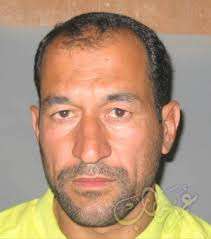
Abu Abdulrahman al-Bilawi
| Adnan Ismail Najm Abdullah al-Dulaimi | |
|---|---|
 | |
| Born |
1971 Al-Khalidiya, Iraq |
| Died |
4 June 2014 (aged 43) Near Mosul, Iraq |
| Allegiance |
 Islamic State of Iraq and the Levant (2013-2014) Islamic State of Iraq and the Levant (2013-2014) |
| Service/branch |
Iraqi Army (1993–2003) Military of ISIL (8 April 2013–4 June 2014) |
| Rank |
Captain (1993-2003) ISIL Military Chief (January 2014–4 June 2014)[1] |
| Battles/wars | |
.svg.png)

.svg.png)
Adnan Ismail Najm al-Bilawi Al-Dulaimi (Arabic: عدنان إسماعيل نجم البيلاوي الدليمي), better known by the nom de guerre Abu Abdulrahman al-Bilawi (Arabic: أبو عبد الرحمن البيلاوي), was a top commander in the Islamic State of Iraq and the Levant and the head of its Military Council, prior to his killing by Iraqi security forces on 4 June 2014.[2][3]
Biography
Al-Bilawi belonged to the Al-bu Bali clan of the Dulaim, the largest tribe in the Iraqi Anbar Province. His tribe formed the nucleus of the resistance/insurgency against U.S. forces in Iraq. The Dulaimis returned to the armed insurgency in 2014. After that the Iraqi army kidnapped Sunni Member of Parliament Ahmed al-Alwani from Dulaim (Albo-alon clan).
According to Ahmad Khalaf al-Dulaimi, the governor of Anbar, he taught him when they were both at the Iraqi Military Academy. Al-Bilawi graduated in 1993 and went on to become an infantry officer in the Iraqi military, achieving the rank of Captain.[1][3]
After the US-led 2003 invasion of Iraq, al-Bilawi joined al-Qaida in Iraq and worked closely with its then-leader, Abu Musab al-Zarqawi. Najm al-Bilawi was detained by American forces in 2005 in Camp Bucca.[1][4][5] Al-Bilawi was one of the approximately 500 prisoners who escaped from Abu Ghraib prison in July 2013, following a raid and mass jailbreak by members of the Islamic State of Iraq and the Levant.[6][7]
Following his escape, he became a member of ISIL’s Military Council and had a major role in planning and leading the groups military offensive in Northern and Central Iraq.[4] Al-Bilawi was killed on 5 June 2014 in a raid by Iraqi security forces in Mosul. Following his death, a laptop belonging to al-Bilawi revealed high quality intelligence on the operations and leadership structure of ISIL.[8] Al-Bilawi had been leading the planning for a military operation against Mosul, following his death ISIL launched the attack, resulting in their total seizure of the city by 9 June 2014. The attack was named the "Invasion of Asadullah al-Bilawi Abu Abdul Rahman" in his honour.[9]
His death was acknowledged by ISIL's official spokesman, Abu Mohammad al-Adnani, in a June 2014 statement that praised his contributions to the group.[4] He was reportedly succeeded by Adnan al-Sweidawi as leader of the ISIL Military Council.[1]
References
- 1 2 3 4 "Military Skill and Terrorist Technique Fuel Success of ISIS". New York Times. 27 August 2014. Retrieved 21 October 2014.
- ↑ Chulov, Martin (15 June 2014). "How an arrest in Iraq revealed Isis's $2bn jihadist network". The Guardian. Retrieved 22 October 2014.
- 1 2 "Revealed: the Islamic State 'cabinet', from finance minister to suicide bomb deployer". The Telegraph. 9 July 2014. Retrieved 21 October 2014.
- 1 2 3 "Kurdish Fighters Take a Key Oil City as Militants Advance on Baghdad". New York Times. 12 June 2014. Retrieved 21 October 2014.
- ↑ "Exclusive: Top ISIS leaders revealed". Al Arabiya. 13 February 2014. Retrieved 23 October 2014.
- ↑ "Source: al Qaeda leader urged affiliate to 'do something'". CNN. 5 August 2013. Retrieved 21 October 2014.
- ↑ "Al Qaeda says it freed 500 inmates in Iraq jail-break". Reuters. 23 July 2013. Retrieved 21 October 2014.
- ↑ "Inside the leadership of Islamic State: how the new 'caliphate' is run". The Telegraph. 9 July 2014. Retrieved 1 November 2014.
- ↑ "The Islamic State of Iraq and Greater Syria: A Primer". The Soufan Group. 13 June 2014. Retrieved 23 October 2014.