Adequate Public Facilities Ordinance
An Adequate Public Facilities Ordinance, APFO, or Concurrency Regulation is a legislative method to tie public infrastructure to growth for a region. [1]
APFOs take into account the availability of infrastructure. They can affect growth, but are considered separate from growth controls such as building moratoria.[2][3]

Ramapo, New York; Petaluma, California; and Boulder, Colorado were some of the early adopters of this tool in America.[4] The state of Florida uses the term "concurrency" in its growth management act.[5]
APFO regulations take into affect some or all of a jurisdiction's infrastructure requirements, including:[6]
- Transportation
- School facilities
- Water supply
- Water treatment
- Roads
Other elements include:
- CIP - Capitol Improvement Programs
- Service Level Standards
Scope
APFO regulations are typically applied to a jurisdiction which has legislative control of a given area. In America, this can be at a state, county, or city level. A conflict can occur when APFO regulations differ in scope between jurisdictions where there is shared funding and legislative authority (such as a city located inside a county that funds schools).[7] While APFOs are intended to mitigate infrastructure shortcomings for a particular area, the mitigation may apply to areas offsite of the development project.[8] APFO regulations usually apply to individual projects on a case-by-case basis.[9]
Criticism
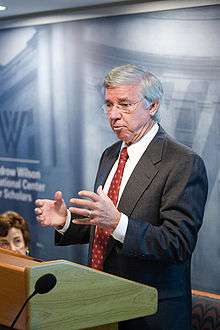
Traditional opponents of APFO legislation include industries affected by moratoria or fees, including realtors, developers, and some Smart Growth advocates.[10] Home costs for some locations that have enacted APFO have experienced increases in housing prices affecting affordable housing, in conjunction with positive effects of relief from school capacity shortcomings.[11]
External links
- An example of a Florida APFO regulation
- Dolan v. City of Tigard - property rights
References
- ↑ Dustin Cole Read. The Cost of Concurrency: A Legal and Empirical Analysis of Adequate Public. p. 40.
- ↑ Eric D. Kelly. Managing Community Growth. p. 60.
- ↑ Sherry Greenfield (10 January 2008). "Gardner says moratorium will not hurt building industry". The Gazzette.
- ↑ Lewis D. Hopkins. Urban Development: The Logic Of Making Plans. p. 138.
- ↑ American Planning Association; Frederick R. Steiner; Kent Butler. Planning and Urban Design Standards. p. 377.
- ↑ S. Mark White. Adequate Public Facilities Ordinances and Transportation Management. p. 17.
- ↑ Sara Newman (1 January 2015). "Calvert County finds northern school populations inadequate Multiple schools closed to future district development". The Gazzette.
- ↑ Kristine Williams. Driveway Regulation Practices. p. 58.
- ↑ Daniel R. Mandelker. Land Use Law.
- ↑ "The National Center for Smart Growth". Retrieved 22 April 2015.
- ↑ Dustin Cole Read. The Cost of Concurrency: A Legal and Empirical Analysis of Adequate Public. p. 123.
See also
| By location | |
|---|---|
| Types | |
| Sectors | |
| Law and regulation | |
| Economics, financing and valuation | |
| Parties | |
| Other |
|
| |


