Bebiankh
| Seuserenre Bebiankh | |||||||||||||||||||||||||||||||||||||||
|---|---|---|---|---|---|---|---|---|---|---|---|---|---|---|---|---|---|---|---|---|---|---|---|---|---|---|---|---|---|---|---|---|---|---|---|---|---|---|---|
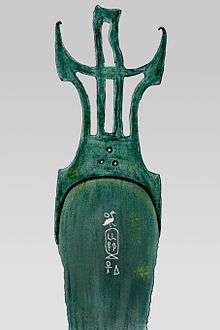 Bronze dagger bearing the inscription "The son of Ra, Bebiankh, given life". British Museum EA 66062. | |||||||||||||||||||||||||||||||||||||||
| Pharaoh | |||||||||||||||||||||||||||||||||||||||
| Reign |
1603–1591 BC or 1600–1588 BC (16th Dynasty) | ||||||||||||||||||||||||||||||||||||||
| Predecessor | Semenre | ||||||||||||||||||||||||||||||||||||||
| Successor | Sekhemre Shedwast or Pepi III (Helck) | ||||||||||||||||||||||||||||||||||||||
| |||||||||||||||||||||||||||||||||||||||
| Died | 1591 or 1588 BC | ||||||||||||||||||||||||||||||||||||||


Seuserenre Bebiankh was a native Ancient Egyptian king of the 16th Theban Dynasty during the Second Intermediate Period and, according to Kim Ryholt, the successor of king Semenre. He is assigned a reign of 12 years in the Turin Canon (11.8).[1]
Bebiankh was succeeded either by a poorly known king named Sekhemre Shedwast or by the equally shadowy ruler Seneferankhre Pepi III.[2]
Attestations
Bebiankh is principally known by a stela[3] found at Gebel Zeit that attests to mining activity conducted in this area by the Red Sea during his reign and preserves his royal names Seuserenre and Bebiankh.[4] This modest stela records this king's activities in the Gebel Zeit galena mines.[5] He is also known to have built an extension to the Temple of Medamud.[6] Bebiankh's nomen was also found on a bronze dagger found in Naqada and now in the British Museum, under the catalog number BM EA 66062.[1]
References
- 1 2 Kim Ryholt, The Political Situation in Egypt during the Second Intermediate Period c.1800-1550 B.C, Museum Tusculanum Press, (1997), p. 202
- ↑ Wolfgang Helck, Eberhard Otto, Wolfhart Westendorf, Stele - Zypresse: Volume 6 of Lexikon der Ägyptologie, Otto Harrassowitz Verlag, 1986, Page 1383
- ↑ Georges Castel & Georges Soukiassian: Dépôt de stèles dans le sanctuaire du Nouvel Empire au Gebel Zeit, BIFAO 85 (1985), ISSN 0255-0962, pp. 291-92, pl. 64
- ↑ Ryholt, pp. 159-60
- ↑ Janine Bourriau, "The Second Intermediate Period (c.1650-1550 BC)" in Ian Shaw (ed.) The Oxford History of Ancient Egypt, Oxford University Press, 2000. p.205
- ↑ XVIIth Dynasty
| Preceded by Semenre |
Pharaoh of Egypt Sixteenth Dynasty of Egypt |
Succeeded by Sekhemre Shedwast |
