Dalit theology
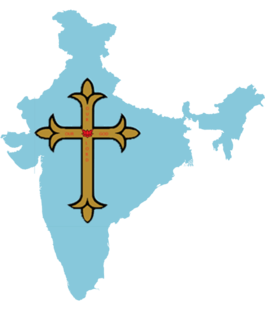
Dalit theology is a branch of Christian theology that emerged among the Dalit caste in India in the 1980s. It shares a number of themes with liberation theology, which arose two decades earlier, including a self-identity as a people undergoing Exodus.[1] Dalit theology sees hope in the "Nazareth Manifesto" of Luke 4,[2] where Jesus speaks of preaching "good news to the poor ... freedom for the prisoners and recovery of sight for the blind" and of releasing "the oppressed."[3]
Development
A major proponent of Dalit theology was Arvind P. Nirmal (1936–95), a Dalit Christian in the Church of North India.[4] Nirmal criticised Brahminic dominance of Christian theology in India, and believed that the application of liberation theology to India should reflect the struggle of Dalits,[4] who make up about 70% of Christians in India, as claimed by Poor Christian Liberation Movement (PCLM).[5][6] Nirmal also criticised the Marxist element within South American liberation theology.[1] Nirmal drew on the concept of the Suffering Servant in Isaiah 53[7] to identify Jesus himself as a Dalit – "a waiter, a dhobi, and bhangi."[8]
Dalit theologians have seen passages in the gospels, such as Jesus' sharing a common drinking vessel with the Samaritan woman in John 4,[9] as indicating his embracing of Dalitness.[10] The parable of the Good Samaritan is also seen as significant, providing a "life-giving message to the marginalized Dalits and a challenging message to the non-Dalits."[11]
M. E. Prabhakar expanded on the Dalitness of Jesus, stating that "the God of the Dalits ... does not create others to do servile work, but does servile work Himself."[12] He also suggested that Jesus experienced human, and especially Dalit, brokenness in his crucifixion.[12] Prabhakar has developed a Dalit creed, which reads in part:
"Our cries for liberation from harsh caste-bondage
Were heard by God, who came to us in Jesus Christ
To live with us and save all people from their sins."[13]
Vedanayagam Devasahayam (b. 1949) of the Church of South India followed Nirmal as head of Dalit theology at the Gurukul Lutheran Theological College, and further developed Nirmal's ideas, writing a number of books.[14] Devasahayam later became bishop of the Church of South India's Madras Diocese.[14]
Dalit theology opposes indigenization movements within Indian Christian liturgy, since these are seen as reinforcing traditional caste hierarchies.[15] However, the incorporation of some pre-Sanskritic Indian religious traditions is supported.[15]
Literature
- Arvind P. Nirmal and V. Devasahayam, A Reader in Dalit Theology, Gurukul Lutheran Theological College & Research Institute, 1990, 180 pages.
- V. Devasahayam, Outside the Camp: Bible Studies in Dalit Perspective, Gurukul Lutheran Theological College & Research Institute, 1992, 54 pages.
- V. Devasahayam, Doing Dalit Theology in Biblical Key, Dept. of Research and Publications, Gurukul Lutheran Theological College and Research Institute, 1997, 75 pages.
- V. Devasahayam, Frontiers of Dalit Theology, Gurukul Lutheran Theological College & Research Institute / Indian Society for Promoting Christian Knowledge, 1997, 501 pages.
- Masilamani Azariah, A Pastor's Search for Dalit Theology, Indian Society for Promoting Christian Knowledge, 2002, 211 pages.
- Peniel Rajkumar, Dalit Theology and Dalit Liberation: Problems, Paradigms and Possibilities, Ashgate, 2010, 218 pages.
- Keith Hebden, Dalit Theology and Christian Anarchism, Ashgate, 2011, 186 pages.
- Y.T. Vinayaraj, Re-imagining Dalit Theology: Postmodern Readings, CSS, 2010
- Anderson H M Jeremiah, Community and worldview among Paraiyars of South India: 'Lived' religion, Bloomsbury, 2012, 285 pages
- Y.T. Vinayaraj,"Dalit Theology after Continental Philosophy," Palgrave Macmillan, 2016.
See also
References
- 1 2 Anand Rao, Soteriologies of India and Their Role in the Perception of Disability, LIT Verlag Berlin-Hamburg-Münster, 2004, ISBN 3-8258-7205-X, p. 232.
- ↑ Jan Peter Schouten, Jesus as Guru: The Image of Christ Among Hindus and Christians in India, Rodopi, 2008, ISBN 90-420-2443-7, p. 247.
- ↑ Luke 4, NIV (BibleGateway).
- 1 2 Hans Schwarz, Theology in a Global Context: The Last Two Hundred Years, Eerdmans, 2005, ISBN 0-8028-2986-4, p. 529.
- ↑ Carol Henderson Garcia and Carol E. Henderson, Culture and Customs of India, Greenwood Publishing Group, 2002, ISBN 0-313-30513-7, p. 40.
- ↑ Dalit Christians demand equality, Times of India, 14 February 2004.
- ↑ Isaiah 53, NIV (BibleGateway).
- ↑ Anand Rao, p. 233.
- ↑ John 4, NIV (BibleGateway).
- ↑ Adrian Bird, M.M. Thomas: Theological Signposts for the Emergence of Dalit Theology, PhD thesis, University of Edinburgh, February, 2008, p. 53–54.
- ↑ M. Gnanavaram, "'Dalit Theology' and the Parable of the Good Samaritan," Journal for the Study of the New Testament, Vol. 15, No. 50, 59-83 (1993).
- 1 2 John Parratt, An Introduction to Third World Theologies, Cambridge University Press, 2004, ISBN 0-521-79739-X, p. 63.
- ↑ Rowena Robinson, Christians of India, SAGE, 2003, ISBN 0-7619-9822-5, pp. 199–200.
- 1 2 Hans Schwarz, p. 530.
- 1 2 Charles Stewart and Rosalind Shaw, Syncretism/Anti-Syncretism: The Politics of Religious Synthesis, Routledge, 1994, ISBN 0-415-11117-X, pp. 101–102.
External links
- George Oommen, "The Emerging Dalit Theology: A Historical Appraisal," Indian Church History Review, Vol. XXXIV, no. 1, June 2000, pp. 19-37.
- Jesudas M Athyal, "New Challenges for Dalit Theology," International Consultation on ‘Dalit Theology and A Theology of the Oppressed’ at Gurukul Lutheran Theological College, Nov 2004
- K. P. Kuruvila, DALIT THEOLOGY: AN INDIAN CHRISTIAN ATTEMPT TO GIVE VOICE TO THE VOICELESS
- Site offering a summary of Dalit history