The Fourteen Infallibles
 The Fourteen Infallibles The Fourteen Infallibles  |
|---|
The Fourteen Infallibles (Arabic: معصومون Ma‘sūmūn) (Persian: چهارده معصوم Chahar'dah Ma‘sūm) in Twelver Shia Islam are the Islamic prophet Muhammad, his daughter Fatima Zahra; and the Twelve Imams. All are considered to be infallible under the theological concept of Ismah.[1][2] Accordingly, they have the power to commit sin but by their nature are able to avoid doing so, which is regarded as a miraculous gift from God.[3] The Infallibles are believed to follow only God's desire in their actions because of their supreme righteousness, consciousness, and love for God.[4] They are also regarded as being immune to error in practical matters, in calling people to religion, and in the perception of divine knowledge.[5] Shias believe the Fourteen Infallibles are superior to the rest of creation and to the other major prophets.[6]
Family tree
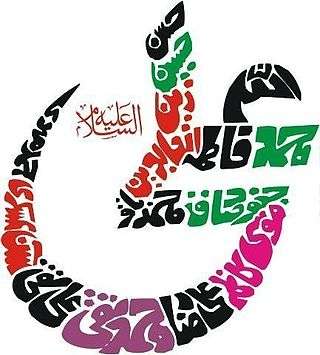
| Muhammad | |||||||||||||||||||||
| Fātimah | ‘Alī | ||||||||||||||||||||
| Hasan | Husayn | ||||||||||||||||||||
| ‘Alī Zaynul ‘Ābidīn | |||||||||||||||||||||
| Muhammad al-Bāqir | |||||||||||||||||||||
| Ja‘far as-Sādiq | |||||||||||||||||||||
| Mūsā al-Kādhim | |||||||||||||||||||||
| ‘Alī ar-Ridhā | |||||||||||||||||||||
| Muhammad al-Jawad | |||||||||||||||||||||
| ‘Alī al-Hadi | |||||||||||||||||||||
| Hasan al-‘Askarī | |||||||||||||||||||||
| Muhammad al-Mahdī | |||||||||||||||||||||
List of the Infallibles
| Modern (calligraphic) depiction | Name (Full) Kunya[lower-alpha 1] |
Title Arabic |
Date of birth and death
|
Importance | Cause and place of death Place of burial[lower-alpha 3] |
|---|---|---|---|---|---|
 |
Muhammad ibn Abdullah[lower-alpha 4] Abu al-Qasim[lower-alpha 5][7] |
Khatam al-Anbia[lower-alpha 7][8] Habib[lower-alpha 8][9] |
|
Considered by Muslims to be the last prophet sent by God to mankind. According to Muslims, God revealed to him the Quran, which is God's word and the greatest miracle.[7] | Fell ill and died in Medina.[7] Buried in Medina, Hijaz, Arabian peninsula.[7] |
 |
Fatimah[lower-alpha 9] Umm Abiha[lower-alpha 10][12] |
Sayyidat al-Nisā[lower-alpha 11][13] al-Zahra[lower-alpha 12][14] |
Mecca, Hijaz, Arabian peninsula[17] |
Her father Muhammad called her "a part of me".[14] She is also regarded as "the mother of the Imams".[18][19] | According to most Shias, Fatimah suffered a fatal injury while defending Ali against the first Sunni caliph.[20] The exact location of her grave is unknown but is believed to be in Medina.[13] |
 |
Ali ibn Abu Talib[lower-alpha 13] Abu al-Hasan[lower-alpha 14][21] |
Mecca, Hijaz, Arabian peninsula[22] |
For all Shia, the son-in-law of Muhammad is the first Shia Imam[24] and the rightful successor of Muhammad.[25] For Sunnis, he is the fourth successor.[16] He holds an important position in almost all Sufi orders, which trace their lineage to Muhammad through him.[22] | Assassinated in Kufa, Iraq, by Abd-al-Rahman ibn Muljam, a Kharijite who slashed his head with a poisoned sword while he was praying.[22] Buried in Najaf, Iraq.[16] | |
 |
Hasan ibn Ali[lower-alpha 16] Abu Muhammad[lower-alpha 17][21] |
Al-Mūjtabā[lower-alpha 18][26] |
Medina, Hijaz, Arabian peninsula[27] |
The eldest surviving grandson of Muhammad, through his mother, Fatimah, Hasan succeeded his father Ali as the caliph in Kufa; but after a seven-month reign he relinquished control of Iraq following a peace treaty with Muawiya I.[27] | According to Twelver Shia belief, he was poisoned fatally by his wife in Medina by order of Caliph Muawiya.[28] Buried in Jannat al-Baqi, Medina.[27] |
 |
Husayn ibn Ali[lower-alpha 19] Abu Abdillah[lower-alpha 20][29] |
Sayyid ash-Shuhada[lower-alpha 21][30] |
Medina, Hijaz, Arabian peninsula[32] |
Grandson of Muhammad and his younger brother of Hasan, Husayn rejected the legitimacy of Caliph Yazid I, the son of Muawiyah. As a result, he and his family were killed in the Battle of Karbala by Yazid's forces.[16] Ever since the battle, the commemoration of Husayn ibn Ali's martyrdom has been at the core of Shia rituals and identity.[32] | Killed and beheaded at the Battle of Karbala[32] Buried at the Imam Husayn Shrine, Karbala, Iraq.[32] |
 |
Ali ibn Husayn[lower-alpha 22] Abu Muhammad[lower-alpha 23][33] |
Al-Sajjad[lower-alpha 24][34]
Zayn al-'Abidin[lower-alpha 25][35] |
Medina, Hijaz, Arabian peninsula[35] |
The author of the prayers in Al-Sahifa al-Sajjadiyya,[34] ("The Scripture of Al-Sajjad", "The Psalm of the Household of the Prophet").[36] | According to most Shia scholars, Zayn al-'Abidin was fatally poisoned by order of Caliph al-Walid I in Medina.[36] Buried in Jannat al-Baqi, Medina.[34] |
 |
Muhammad ibn Ali[lower-alpha 26] Abu Ja'far[lower-alpha 27][29][37] |
Baqir al-Ulum[lower-alpha 28][37] | Medina, Hijaz, Arabian peninsula[37] |
Sunni and Shia sources consider Al-Baqir an early and pre-eminent legal scholar who was revered for having educated many students.[34][37] | According to some Shia scholars, he was fatally poisoned by Ibrahim ibn Walid ibn 'Abdallah in Medina by order of Caliph Hisham ibn Abd al-Malik. Buried in Jannat al-Baqi, Medina[34] |
 |
Ja'far ibn Muhammad[lower-alpha 29] Abu Abdillah[lower-alpha 30][34] |
As-Sadiq[lower-alpha 31][38] | Medina, Hijaz, Arabian peninsula[39] |
As-Sadiq established the Ja'fari school of jurisprudence and developed the theology of the Twelvers.[34] He taught many scholars in different fields, including Abu Hanifah[34] and Malik ibn Anas in fiqh, Wasil ibn Ata and Hisham ibn Hakam in Islamic theology, and Geber in science and alchemy.[39] | According to Shia sources, he was fatally poisoned in Medina by order of Caliph Al-Mansur.[39] Buried in Jannat al-Baqi, Medina[34] |
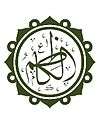 |
Musa ibn Ja'far[lower-alpha 32] Abu al-Hasan I[lower-alpha 33][40] |
Al-Kazim[lower-alpha 34][41] |
Medina, Hijaz, Arabian peninsula[41] |
Al-Kazim was leader of the Shia community during the schism between the Ismaili and other branches of Islam after the death of the previous Imam Jafar al-Sadiq.[42] He established a network of agents who collected the khums in the Shia community of the Middle East and the Greater Khorasan. He holds a high position in the Mahdavia, the members of which trace their lineage to Muhammad through him.[43] | According to Shia belief, he was imprisoned and fatally poisoned in Baghdad, Iraq, by order of Caliph Harun al-Rashid.[44] Buried in the Kazimayn shrine, Baghdad, Iraq[34][41] |
 |
Ali ibn Musa[lower-alpha 35] Abu al-Hasan II[lower-alpha 36][40] |
Ar-Rida[lower-alpha 37][41] | Medina, Hijaz, Arabian peninsula[45] |
Made crown prince by Caliph Al-Ma'mun, Ar-Rida was known for his discussions and debates with both Muslim and non-Muslim religious scholars.[46] | According to Shia sources, he was fatally poisoned in Mashad, Iran, by order of Caliph Al-Ma'mun.[46] Buried in the Imam Reza shrine, Mashad, Iran[46] |
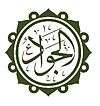 |
Muhammad ibn Ali[lower-alpha 38] Abu Ja'far[lower-alpha 39][29] |
Al-Taqi[lower-alpha 40][46] Al-Jawad[lower-alpha 41][47] |
Medina, Hijaz, Arabian peninsula[47] |
Al-Jawad was known for his generosity and piety in the face of persecution by the Abbasid caliphate.[48] | According to Shia sources, he was fatally poisoned by his wife, the daughter of Caliph Al-Ma'mun, in Baghdad, Iraq, by order of Caliph Al-Mu'tasim.[47] Buried in the Kazmain shrine, Baghdad, Iraq.[46] |
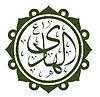 |
Ali ibn Muhammad[lower-alpha 42] Abu al-Hasan III[lower-alpha 43][49] |
Al-Hadi[lower-alpha 44][50]
Al-Naqi[lower-alpha 45][46] |
Surayya, a village near Medina, Hijaz, Arabian peninsula[49] |
Al-Naqi taught religious sciences until 243/857.[46] He strengthened the network of deputies in the Shia community. He sent them instructions and in turn received financial contributions from the faithful, from the khums and religious vows.[49] | According to Shia sources, he was fatally poisoned in Samarra, Iraq, by order of caliph Al-Mu'tazz.[47] Buried in the Al Askari Mosque, Samarra, Iraq.[46] |
 |
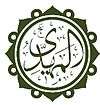
Hasan ibn Ali[lower-alpha 46] Abu Muhammad[lower-alpha 47] [51] |
Al-Askari[lower-alpha 48][52] | Medina, Hijaz, Arabian peninsula[52] |
Like his father, Al-Askari was placed under house arrest, which would last most of his life, by the Abbasid Caliph Al-Mu'tamid, .[53] During this time, repression of the Shia communities was great because of their growing size and power.[54] | According to Shia belief, Al-Askari was fatally poisoned by order of Caliph Al-Mu'tamid in Samarra, Iraq.[55] Buried in the Al Askari Mosque, Samarra, Iraq.[46] |
 |
Muhammad ibn al-Hasan[lower-alpha 49] Abu al-Qasim[lower-alpha 50][30] |
Mahdi[lower-alpha 51][lower-alpha 52][56]
Hidden Imam[lower-alpha 53][57] Al-Hujjah[lower-alpha 54][30][58] Sahib al-Zaman[lower-alpha 55][51] Sahibu'l-Amr[lower-alpha 56][51] Al-Qa'im[lower-alpha 57][30] Baqiyyat Allah[lower-alpha 58][30] |
Samarra, Iraq[60] |
According to Twelver Shia doctrine, Baqiyyat Allah is a historical person, the current Imam, and the promised Mahdi—a messianic figure who will return with Jesus Christ. He will re-establish the rightful governance of Islam, filling the earth with justice and peace.[61] | According to Shia doctrine, Baqiyyat Allah has been living in the Occultation since 874 CE, and will continue living as long as God wills.[59] |
See also
| |||
|---|---|---|---|
| The Fourteen Infallibles | |||
|
|||
| Principles | |||
| Other beliefs | |||
| Practices | |||
| Holy cities | |||
| Groups | |||
|
|
|||
| Scholarship | |||
| Hadith collections | |||
| Related topics | |||
| Related portals | |||
|
|||

Notes and references
Notes
- ↑ A kunya (Arabic: كنية, kunyah) is a teknonym in Arabic names, the name of an adult derived from his or her eldest child.
- ↑ The abbreviation CE refers to the Common Era solar calendar, while AH refers to the Islamic Hijri lunar calendar
- ↑ Except the Twelfth Imam
- ↑ محمد بن عبدالله
- ↑ أبو القاسم
- ↑ the Messenger of God (Persian: رسول الله)
- ↑ The Seal of the Prophets (Persian: خاتم الانبیاء)
- ↑ The Beloved (Persian: حبیب)
- ↑ فاطمة
- ↑ The Mother for Her Father (Persian: ام ابیها)
- ↑ The master of all women (Persian: سیدة نساء)
- ↑ The Shining (Persian: زهرا)
- ↑ علي بن أبي طالب
- ↑ أبو الحسن
- ↑ The Commander of the Faithful (Persian: امیرالمؤمنین)
- ↑ حسن بن علي
- ↑ أبو محمد
- ↑ The Chosen (Persian: مجتبی)
- ↑ حسین بن علي
- ↑ أبو عبدالله
- ↑ Master of the Martyrs (Persian: سیّد الشهداء)
- ↑ علي بن الحسین
- ↑ أبو محمد
- ↑ السجّاد
- ↑ the Ornament of the Worshipers (Persian: زین العابدین)
- ↑ محمد بن علي
- ↑ أبو جعفر
- ↑ The Revealer of Knowledge (Persian: باقرالعلوم)
- ↑ جعفر بن محمد
- ↑ أبو عبدالله
- ↑ The Honest (Persian: صادق)
- ↑ موسی بن جعفر
- ↑ أبو الحسن الاول
- ↑ The Calm One (Persian: کاظم)
- ↑ علي بن موسی
- ↑ أبو الحسن الثانی
- ↑ The Pleasing One (Persian: رضا)
- ↑ محمد بن علي
- ↑ أبو جعفر
- ↑ The God-Fearing (Persian: تقی)
- ↑ الجواد
- ↑ علي بن محمد
- ↑ أبو الحسن الثالث
- ↑ هادی
- ↑ The Pure (Persian: نقی)
- ↑ الحسن بن علي
- ↑ أبو محمد
- ↑ The Citizen of a Garrison Town (Persian: عسگری)
- ↑ محمد بن الحسن
- ↑ أبو القاسم
- ↑ المهدی
- ↑ The Guided One or The Guide (Persian: مهدی)
- ↑ (Persian: امام غائب)
- ↑ The Proof (Persian: حجت)
- ↑ The Lord of Our Times (Persian: صاحب الزمان)
- ↑ The one vested with Divine authority (Persian: صاحب الامر)
- ↑ The Resurrector (Persian: قائم)
- ↑ God's Remainder (Persian: بقیةالله)
References
- ↑ Dabashi 2006, p. 463
- ↑ Corbin 1993, p. 48
- ↑ Nasr, Dabashi & Nasr 1989, p. 98
- ↑ Donaldson 1933, p. 326
- ↑ Ansariyan 2007, p. 89
- ↑ Algar 1990
- 1 2 3 4 5 6 7 Nasr 2006
- ↑ Mir 1987, p. 171
- ↑ Nasr 2013, p. 61
- ↑ Tabatabaei 1975, p. 131
- ↑ Tabatabaei 1975, p. 134
- ↑ Walbridge 2001, p. 103
- 1 2 Klemm 2014
- 1 2 3 Chittick 1980, p. 136
- ↑ Qurashī 2007, p. 38
- 1 2 3 4 5 6 Chittick 1980, p. 137
- ↑ Dungersi 1994, p. 4
- ↑ Hughes 2013, p. 258
- ↑ Rayshahri 2008, p. 68
- ↑ Lammens 2012
- 1 2 Rizvi 1988, p. 48
- 1 2 3 4 5 Nasr 2007
- ↑ Ahmed 2005, p. 234
- ↑ Poonawala 1985
- ↑ Mashita 2002, p. 69
- ↑ Corbin 1993, p. 50
- 1 2 3 4 Madelung 2003
- ↑ Tabatabaei 1975, p. 173
- 1 2 3 Rizvi 1988, p. 49
- 1 2 3 4 5 Amir-Moezzi 1994, p. 174
- ↑ Tabatabaei 1975, pp. 198–199
- 1 2 3 4 Madelung 2004
- ↑ Qurashī 2007, p. 17
- 1 2 3 4 5 6 7 8 9 10 11 12 13 14 15 16 17 Chittick 1980, p. 138
- 1 2 3 4 Madelung 1985
- 1 2 3 4 Tabatabaei 1975, pp. 178–179
- 1 2 3 4 5 6 Madelung 1988
- ↑ Tabatabaei 1975, p. 15
- 1 2 3 Tabatabaei 1975, p. 180
- 1 2 Madelung 1985b
- 1 2 3 4 Tabatabaei 1975, p. 181
- ↑ Tabatabaei 1975, p. 68
- ↑ Sachedina 1988, pp. 53–54
- ↑ Amir-Moezzi 2011, p. 207
- ↑ Tabatabaei 1975, pp. 182–183
- 1 2 3 4 5 6 7 8 9 10 11 12 Chittick 1980, p. 139
- 1 2 3 4 5 Tabatabaei 1975, p. 183
- ↑ Qurashī 2005
- 1 2 3 4 5 Madelung 1985a
- ↑ Dungersi 2005, p. 16
- 1 2 3 Rizvi 1988, p. 50
- 1 2 3 4 Halm 1987
- ↑ Dungersi 2005, p. 188
- ↑ Tabatabaei 1975, p. 184
- ↑ Dungersi 2005, p. 196
- ↑ Amir-Moezzi 2007
- ↑ Amir-Moezzi 1994, p. 115
- ↑ Nasr 2013, p. 161
- 1 2 3 Tabatabaei 1975, p. 186
- ↑ Tabatabaei 1975, p. 185
- ↑ Tabatabaei 1979, pp. 211–214
Sources
- Encyclopedias
- Ahmed, M. Mukarram (2005). Encyclopaedia of Islam. Anmol Publications Pvt. Ltd. ISBN 978-81-261-2339-1.
- Algar, Hamid (1990). "Chahardah M'asum". Encyclopædia Iranica. Retrieved 2008-07-18.
- Amir-Moezzi, Mohammad Ali (2007). "Islam in Iran-vii. The Concept of Mahdi in Twelver Shi'ism". Encyclopædia Iranica. Retrieved 2015-03-11.
- Halm, H (1987). "ʿAskari". Encyclopædia Iranica. Retrieved 2015-03-11.
- Klemm (2014). "Fāṭima bt. Muḥammad". Encyclopaedia of Islam 3.
- Lammens (2012). "Fatima". Encyclopaedia of Islam. Brill Online. ISBN 978-90-04-08265-6.
- Madelung, Wilferd (1985). "'Ali b. Al-Hosayn". Encyclopædia Iranica. Retrieved 2015-03-11.
- Madelung, Wilferd (1985a). "'Ali Al-Hadi". Encyclopædia Iranica. Retrieved 2015-03-11.
- Madelung, Wilferd (1985b). "ʿAli Al-Reza". Encyclopædia Iranica. Retrieved 2007-11-09.
- Madelung, Wilferd (1988). "Baqer, Abu Ja'far Mohammad". Encyclopædia Iranica. Retrieved 2007-11-08.
- Madelung, Wilferd (2003). "Hasan ibn Ali". Encyclopædia Iranica. Retrieved 2015-03-11.
- Madelung, Wilferd (2004). "Ḥosayn B.ʿAli. Life and Significance in Shi'ism". Encyclopædia Iranica. Retrieved 2015-03-11.
- Mattar, Philip (2004). Encyclopedia of the Modern Middle East and North Africa. Macmillan Reference USA. ISBN 978-0-02-865772-1.
- Nasr, Seyyed Hossein (2006). "Muhammad". Encyclopædia Britannica Online. Encyclopædia Britannica, Inc. Retrieved 2015-03-11.
- Nasr, Seyyed Hossein (2007). "Ali". Encyclopædia Britannica Online. Retrieved 2015-03-11.
- Poonawala, I. K. (1985). "ʿAli B. Abi Ṭaleb". Encyclopædia Iranica. Retrieved 2014-07-07.
- Books
- Amir-Moezzi, Mohammad Ali (1994). The Divine Guide in Early Shi'ism: The Sources of Esotericism in Islam. SUNY Press. ISBN 978-0-7914-2122-2.
- Amir-Moezzi, Mohammad Ali (2011). The Spirituality of Shi'i Islam: Belief and Practices. I. B. Tauris. ISBN 978-1-84511-738-2.
- Ansariyan, Hussein (2007). Ahl Al-Bayt The Celestial Beings on the Earth. Ansariyan Publications. ISBN 978-964-438-873-6. Archived from the original on October 6, 2014.
- Chittick, William C. (1980). A Shi'ite Anthology. SUNY Press. pp. 136–140. ISBN 978-0-87395-510-2. Retrieved 27 April 2015.
- Corbin, Henry (1993). History of Islamic Philosophy. Kegan Paul International in association with Islamic Publications for The Institute of Ismaili Studies. ISBN 978-0-7103-0416-2.
- Dabashi, Hamid (2006). Theology of Discontent: The Ideological Foundation of the Islamic Revolution in Iran. Transaction Publishers. ISBN 1-4128-0516-3.
- Donaldson, Dwight M. (1933). The Shi'ite Religion: A History of Islam in Persia and Irak. Burleigh Press. ISBN 978-0-404-18959-4.
- Dungersi, Mohammed Raza (1994). A Brief Biography of Hazrat Fatima (s.a.). Bilal Muslim Mission of Tanzania. OCLC 66915718.
- Dungersi, Mohammed Raza (2005). A Brief Biography of Imam Hasan al-Askari. Ansariyan Publications. ISBN 978-964-438-689-3. Archived from the original on February 20, 2015.
- Hughes, Aaron (23 April 2013). Muslim Identities: An Introduction to Islam. Columbia University Press. ISBN 978-0-231-16147-3.
- Mashita (2002). Theology, ethics and metaphysics. Hiroyuki. Routledge Curzon. ISBN 978-0-7007-1670-8.
- Mir, Mustansir (1987). "Seal of the Prophets, The". Dictionary of Qur’ānic Terms and Concepts. Garland Publishing.
- Nasr, Seyyed Hossein; Dabashi, Hamid; Nasr, Seyyed Vali Reza (1989). Expectation of the Millennium: Shi'ism in History. SUNY Press. ISBN 978-0-88706-843-0.
- Nasr, Seyyed Hossein (2013). Islamic Spirituality: Foundations. Routledge. ISBN 978-1-134-53895-9.
- Qurashī, Bāqir Sharīf (2007). The life of Imām Zayn al ‘Abidin (A.S.). Ansariyan Publications. ISBN 978-9644381652. Archived from the original on August 16, 2014.
- Qurashī, Bāqir Sharīf (2005). The Life of Imam Muhammad Al-Jawad. Ansariyan Publications. ISBN 978-964-438-653-4. Archived from the original on July 13, 2014.
- Rayshahri, M. Muhammadi (12 January 2008). The scale of wisdom: a compendium of Shi'a Hadith. ICAS Press. ISBN 978-1-904063-34-6.
- Rizvi, Sayyid Saeed Akhtar (1988). Imamate: The vicegerency of the Holy Prophet. Bilal Muslim Mission of Tanzania. ISBN 978-9976-956-13-9.
- Sachedina, Abdulaziz Abdulhussein (1988). The Just Ruler (al-sultān Al-ʻādil) in Shīʻite Islam: The Comprehensive Authority of the Jurist in Imamite Jurisprudence. Oxford University Press. ISBN 0-19-511915-0.
- Tabatabaei, Sayyid Mohammad Hosayn (1975). Shi'ite Islam. Translated by Sayyid Hossein Nasr. SUNY Press. ISBN 978-0-87395-390-0.
- Tabatabaei, Sayyid Mohammad Hosayn (1979). Shi'ite Islam. Translated by Seyyed Hossein Nasr. SUNY press. ISBN 978-0-87395-272-9.
- Walbridge, Linda S. (6 August 2001). The Most Learned of the Shi`a: The Institution of the Marja` Taqlid. Oxford University Press. ISBN 978-0-19-534393-9.
External links
- A Chronological List of the Fourteen Infallibles
- A Brief History of the Fourteen Infallibles by WOFIS World Organization for Islamic Services Tehran -Iran
- The Brief History of the Fourteen Infallibles by Mohammad Hussein il’adeeb