Gyeongui–Jungang Line
| Gyeongui–Jungang Line | |
|---|---|
   | |
| Overview | |
| Native name |
경의·중앙선(京義·中央線) Gyeongui-Jungang-seon |
| Type | Commuter rail |
| System | Seoul Metropolitan Subway |
| Status | Operational |
| Termini |
Munsan Yongmun or Seoul |
| Stations | 53 |
| Operation | |
| Opened | 27 December 2014 |
| Owner | South Korean government |
| Operator(s) | Korail |
| Depot(s) | Munsan Depot, Yongmun Depot |
| Rolling stock |
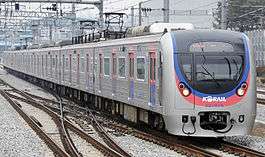
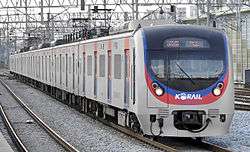
Korail Class 321000 (21 trains) Korail Class 331000 (27 trains) |
| Technical | |
| Line length | 124.5 km (77.4 mi) |
| Number of tracks |
2 (Munsan–Neunggok, Gajwa–Yongmun, Gajwa–Seoul) 4 (Neunggok–Gajwa) |
| Track gauge | 1,435 mm (4 ft 8 1⁄2 in) |
| Electrification | AC 25,000 V 60 Hz |
The Gyeongui–Jungang Line of the Seoul Metropolitan Subway system is a major commuter rail service operating on the Gyeongui Line (opened on July 1, 2009) and the Jungang Line (opened on December 16, 2005).[1]
Frequent service is provided between Munsan and Yongmun by 8-car trains. However, some services (run by 4-car trains) split for Seoul Station east of Gajwa. Additionally, many trains terminate at various locations on the line such as Ilsan, Neunggok, Daegok, Yongsan, Cheongnyangni, Deokso, and Yangpyeong.
Trains travel along the Gyeongui (Munsan-Seoul Station/Gajwa), Yongsan (Gajwa-Yongsan), Gyeongwon (Yongsan-Hoegi), and Jungang (Hoegi-Yongmun) lines.
The line runs on the left-hand side of the track, like all other Korail-run Seoul Metropolitan Subway lines.
History
2005:
- December 16: The Jungang Line section is officially opened from Yongsan to Deokso as the Yongsan-Deokso Line.
2007:
- December 27: The Jungang Line section is extended eastward from Deokso to Paldang. The Yongsan-Deokso Line is renamed to the Jungang Line.
2008:
- December 29: The Jungang Line section is extended eastward from Paldang to Guksu.
2009:
- July 1: The Gyeongui Line section is officially opened from Munsan to Digital Media City, with a spur line to Seoul Station.
- December 23: The Jungang Line section is extended eastward from Guksu to Yongmun. Sinwon Station is opened as an in-fill station on the Jungang Line section.
2010:
- December 21: Sangbong Station and Obin Station open as in-fill stations on the Jungang Line section.
2012:
- December 15: The Gyeongui Line section's main line is extended eastward from Digital Media City to Gongdeok.
2014:
- October 25: Gangmae Station opens as an in-fill station on the Gyeongui Line section.
- December 27: The Gyeongui Line section is extended eastward from Gongdeok to Yongsan, and the present Gyeongui-Jungang Line is formed after Gyeongui and Jungang lines are merged.
2015:
- October 31: Yadang Station opens as an in-fill station.
2016:
- April 30: Hyochang Park Station opens as an in-fill station.
Future Plans
The Gyeongui-Jungang line is planned to be extended in both directions. The line will be extended eastward from Yongmun to Jipyeong Station on the Jungang Line sometime in December 2016. The line will also be extended northward from Munsan to Dorasan Station on the Gyeongui Line, replacing "'Tonggeun" service operating there. This extension is expected start construction in 2018.
Rapid (Express) trains
Korail operates a variety of express "rapid" (급행) trains for regional services on the Gyeongui-Jungang Line. These services include:
- Gyeongui Line express services via the Seoul Station branch, operating express between Munsan and Sinchon (Gyeongui) and then continuing as local trains to Seoul Station.
- Gyeongui Line express services via the Yongsan Line, operating express between Munsan and Yongsan and then continuing as local trains on the Jungang Line to Deokso, Paldang, or Yongmun.
- Jungang Line express services, operating express between Yongsan and Yongmun and then continuing as local trains on the Gyeongui Line to Susaek or Munsan.
Rolling Stock
Korail Class 321000 (21 trains)
Korail Class 331000 (27 trains)
Stations
GY: Gyeongui Express Line (via the Yongsan Line)
GS: Gyeongui Express Line (via the Seoul Station branch)
J: Jungang Express Line
Main Line
| ● | stops at the station |
| | | does not stop at the station |
| ▲ | limited service (only some trains stop) |
| Number |
English |
Hangul |
Hanja |
|
in km |
Distance |
| |||||
| |
Munsan | 문산 | 文山 | ● | ● | |
|
|
|
| ||
| |
Paju | 파주 (두원대학) | 坡州 (斗源大學) |
| | | | |
| |||||
| |
Wollong | 월롱 | 月籠 | | | | | |
| |||||
| |
Geumchon | 금촌 | 金村 | ● | ● | |
| |||||
| |
Geumneung | 금릉 | 金陵 | ● | | | |
| |||||
| |
Unjeong | 운정 | 雲井 | ▲ | ● | |
| |||||
| |
Yadang | 야당 | 野塘 | | | | | |
| |||||
| |
Tanhyeon | 탄현 | 炭峴 | ● | | | |
|
| ||||
| |
Ilsan | 일산 | 一山 | ● | ● | |
| |||||
| |
Pungsan | 풍산 | 楓山 | | | | | |
|
| ||||
| |
Baengma | 백마 | 白馬 | ● | ● | |
| |||||
| |
Goksan | 곡산 | 谷山 | | | | | |
| |||||
| |
Daegok | 대곡 | 大谷 | ● | ● |  Gyooe Line Gyooe LineDaegok–Sosa Line (Planned) |
|
|
| |||
| |
Neunggok | 능곡 | 陵谷 | | | | | Gyooe Line | |
| ||||
| |
Haengsin | 행신 | 幸信 | ● | ● |  Gyeongbu HSR Gyeongbu Honam Gyeongjeon Jeolla Gyeongbu HSR Gyeongbu Honam Gyeongjeon Jeolla |
|
| ||||
| |
Gangmae | 강매 | 江梅 | | | | | |
| |||||
| |
Hwajeon (Korea Aerospace Univ.) |
화전 (한국항공대) | 花田 (韓國航空大) |
| | | | |
| |||||
| |
Susaek | 수색 | 水色 | | | | | |
|
|
| |||
| |
Digital Media City | 디지털미디어시티 | DigitalMediaCity | ● | ● |   |
|
| ||||
| |
Gajwa | 가좌 | 加佐 | | | | | Gyeongui–Jungang (via Seoul Station branch) |
|
|
| |||
| |
Hongik Univ. | 홍대입구 | 弘大入口 | ● | No service |  |
|
|
| |||
|---|---|---|---|---|---|---|---|---|---|---|---|---|
| |
Sogang Univ. | 서강대 | 西江大 | | | |
| ||||||
| |
Gongdeok | 공덕 | 孔德 | ● |  |
|
| |||||
| |
Hyochang Park | 효창공원앞 | 孝昌公園앞 | | | |
|
|
| ||||
| |
Yongsan | 용산 | 龍山 | ● | ● |  Shinbundang (TBD) Honam  Saemaul-ho services Mugunghwa-ho services Saemaul-ho services Mugunghwa-ho services |
|
| ||||
| |
Ichon | 이촌 | 二村 | |
● |  |
|
| ||||
| |
Seobinggo | 서빙고 | 西氷庫 | | | |
| ||||||
| |
Hannam | 한남 | 漢南 | | | |
| ||||||
| |
Oksu | 옥수 | 玉水 | ● | |
|
|
| ||||
| |
Eungbong | 응봉 | 鷹峰 | | | |
| ||||||
| |
Wangsimni | 왕십리 | 往十里 | ● | Bundang |
|
| |||||
| |
Cheongnyangni | 청량리 | 淸凉里 | ● | |
|
|
| ||||
| |
Hoegi | 회기 | 回基 | ● | |
|
| |||||
| |
Jungnang | 중랑 | 中浪 | | | |
|
| |||||
| |
Sangbong | 상봉 | 上鳳 | ● |  Gyeongchun Gyeongchun |
|
| |||||
| |
Mangu | 망우 | 忘憂 | | | Gyeongchun | |
| |||||
| |
Yangwon | 양원 | 養源 | | | |
| ||||||
| |
Guri | 구리 | 九里 | ● |  (2017) (2017) |
|
|
|
| |||
| |
Donong | 도농 | 陶農 | ● | |
|
| |||||
| |
Yangjeong | 양정 | 養正 | | | |
| ||||||
| |
Deokso | 덕소 | 德沼 | ● | |
| ||||||
| |
Dosim | 도심 | 陶深 | ● | |
| ||||||
| |
Paldang | 팔당 | 八堂 | | | |
| ||||||
| |
Ungilsan | 운길산 | 雲吉山 | | | |
| ||||||
| |
Yangsu | 양수 | 兩水 | ● | |
|
| |||||
| |
Sinwon | 신원 | 新院 | | | |
| ||||||
| |
Guksu | 국수 | 菊秀 | | | |
| ||||||
| |
Asin | 아신 | 我新 | | | |
| ||||||
| |
Obin | 오빈 | 梧濱 | | | |
| ||||||
| |
Yangpyeong | 양평 | 楊平 | ● | |
| ||||||
| |
Wondeok | 원덕 | 元德 | | | |
| ||||||
| |
Yongmun | 용문 | 龍門 | ● | |
| ||||||
| |
Jipyeong (2016) | 지평 | 砥平 | |
| |||||||
| Station # | Station | Hangeul | Hanja | Connecting lines | Doors open | ||
|---|---|---|---|---|---|---|---|
| K315 | Gajwa | 가좌 | 加佐 | | | Gyeongui–Jungang (via Yongsan Line) |
Right | |
| P314 | Sinchon | 신촌 | 新村 | ● | Right | ||
| P313 | Seoul | 서울 | 首爾 | ● | Gyeongbu HSR Gyeongbu Saemaul-ho services Mugunghwa-ho services |
Right | |
References
- ↑ Lee, Seon (1 December 2014). "경기도 "동∼서 횡단 전철...첫 노선 27일 개통"" (in Korean). Ilgan Gyeonggi. Retrieved 1 December 2014.
External links
| KTX | | |
|---|---|---|
| Main | ||
| Regional | ||
| Urban/Rapid |
| |
| Seoul Capital Area |
| ||||||||||||||||||||
|---|---|---|---|---|---|---|---|---|---|---|---|---|---|---|---|---|---|---|---|---|---|
| Busan |
| ||||||||||||||||||||
| Daegu | |||||||||||||||||||||
| Daejeon |
| ||||||||||||||||||||
| Gwangju |
| ||||||||||||||||||||