Lihing
 Lihing (left) together with talak and sikat. | |
| Type | Rice wine |
|---|---|
| Distributor | Borneo Trading Post,[1] Lihing Nilyn[2] |
| Country of origin | Malaysia |
| Region of origin | Sabah |
| Colour | Yellow |
| Flavour | Sweet |
| Variants | hiing, kinarung, kinomol, kinopi, linahas, sagantang as well tapai |
Lihing is a type of Malaysian rice wine that originated from the state of Sabah. It was made from "pulut", a glutinous rice and is a traditional rice wine for the Kadazan-Dusun people.[3] The rice wine is also referred as hiing (in certain Dusun dialects), kinarung, kinomol, kinopi, linahas, sagantang as well tapai.[1] The other are different but all are made from rice-based drinks. Lihing is sold widely in Sabah including in some major hotels.
The wine is also usually used in the making of Tuaran mee,[4] as well recently been used to make ice cream,[5] and served during the Kaamatan festival.[6]
Gallery
-

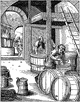
Three different types of rice been used to produce lihing, talak and sikat.
-

Distillation equipment to produce the three different types of rice wine.
References
- 1 2 Herman Scholz. "Lihing - Sabah's Very Own Rice Wine". Flying Dusun. Retrieved 20 October 2016.
- ↑ "Lihing Nilyn / Neo Marketing". Sabah SME. Retrieved 20 October 2016.
- ↑ Chris Rowthorn; Muhammad Cohen; China Williams (2008). Borneo. Ediz. Inglese. Lonely Planet. pp. 97–. ISBN 978-1-74059-105-8.
- ↑ Julia Chan (13 April 2016). "A delicious primer to the many noodle dishes found in Sabah". The Malay Mail. Retrieved 20 October 2016.
- ↑ "Giving the local dishes a boost". Daily Express. 28 July 2016. Retrieved 20 October 2016.
- ↑ Roy Goh (19 May 2016). "Nothing like Sabah's Kaamatan". New Straits Times. Retrieved 20 October 2016.
Further reading
- How to Make Lihing on Flying Dusun