List of one-hit wonders in the United States
A one-hit wonder is a Top 40 phenomenon; the combination of artist and song that scores huge in the music industry with one single, but is unable to repeat the achievement. The term can refer to the artist, the song, or both together.
Criteria
Music journalist Wayne Jancik, whose book, The Billboard Book of One-Hit Wonders, defines a one-hit wonder rather conservatively, as "an act that has won a position on Billboard's national, pop, Top 40 just once." He therefore includes influential performers such as Janis Joplin and Jimi Hendrix solely on the basis of their Top 40 performance on the Billboard Hot 100 (the criteria thus ignores competing charts such as those published by Mediabase and the now defunct Cash Box and Radio & Records). In his definition of an "act", Jancik distinguishes between a solo performer and any group he or she may have performed in; thus Roger Daltrey is distinguished from The Who, Joplin is distinguished from Big Brother and the Holding Company and Ted Nugent is distinguished from The Amboy Dukes. He restricts his reporting time to the period from the start of the "rock-and-roll era" (defined by the author as 1 January 1955) to 31 December 1992. The latter date was picked to allow a five-year "lag time" before publication for a listed one-hit wonder to produce a second hit; this unfortunately does not allow for a longer hiatus between hits for a particular performer. For example, Lenny Kravitz is listed for "It Ain't Over 'Til It's Over" (No. 2, August 1991);[1] the book therefore misses subsequent hits, such as "Fly Away" (which hit number 12 on the Hot 100) and "Dig In" (which hit number 31 on the Hot 100).
Jancik's The Billboard Book of One-Hit Wonders, because of the publisher's limitation on size, only includes the top twenty One-Hit Wonders, or roughly half of the one-hit wonders that made the Top 40 from 1955 through 1992. The author has published a website "One-Hit Wonders," The Book, which now includes all the one-hit wonders profiles he had originally written for the book.
Fred Bronson, a journalist and former writer for Billboard magazine, in his book Billboard's Hottest Hot 100 Hits, uses the criterion that if an artist has another song hitting the Billboard Hot 100, is ineligible to be considered a one-hit wonder.[2]
Songs by decade
Each decade of one-hit wonders has a corresponding entry:
- List of 1950s one-hit wonders in the United States
- List of 1960s one-hit wonders in the United States
- List of 1970s one-hit wonders in the United States
- List of 1980s one-hit wonders in the United States
- List of 1990s one-hit wonders in the United States
- List of 2000s one-hit wonders in the United States
- List of 2010s one-hit wonders in the United States
One-hit wonders from other media

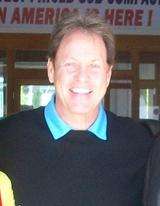
The list of Billboard one-hit wonders also features artists better known for talents other than pop vocals:
- Alan Arkin (actor), with The Tarriers, "The Banana Boat Song" (No. 4, February 1957[3])
- Jim Backus (actor), as "Jim Backus & Friend", "Delicious" (No. 40, July 1958[4])
- Edd Byrnes (actor), "Kookie, Kookie (Lend Me Your Comb)" (No. 4, May 1959[5])
- Keith Carradine (actor), "I'm Easy" (No. 17, August 1976[6])
- Bill Cosby (comedian), "Little Ole Man (Uptight, Everything's Alright)" (No. 4, August 4, 1967)[7]
- Les Crane (talk show host), "Desiderata" (No. 8, 1971)
- Rick Dees (radio disc jockey) as Rick Dees and His Cast of Idiots, "Disco Duck" (No. 1, October 1976[8])
- Everett Dirksen (U.S. Senator), "Gallant Men" (No. 29, December 1966[9])
- Mike Douglas (talk show host), "The Men in My Little Girl's Life" (No. 6, February 1966[10])
- Lorne Greene (actor), "Ringo" (No. 1, November 1964[11])
- Jasmine Guy (actress), "Just Want to Hold You" (No. 34, August 1991[12])
- Richard Harris (actor), "MacArthur Park" (No. 2, June 1968[13])
- Paris Hilton (heiress and reality television star), "Stars Are Blind" (No. 18, July 2006[14])
- Don Johnson (actor), "Heartbeat" (No. 5, September 1986[15])
- Anna Kendrick (actress), "Cups" (No. 6, 2013)
- Cheryl Ladd (actress), "Think It Over" (No. 34, September 1978[16])
- Vicki Lawrence (actor), "The Night the Lights Went Out in Georgia" (No. 1, April 1973[17])
- Jerry Lewis (comedian), "Rock-a-Bye Your Baby with a Dixie Melody" (No. 10, December 1956[18])
- Moms Mabley (comedian), "Abraham, Martin and John" (No. 35, July 1969)
- George Maharis (actor), "Teach Me Tonight" (No. 25, June 1962[19])
- Wink Martindale (game show host), "Deck of Cards" (No. 7, November 1959[20])
- Steve Martin (comedian), "King Tut" (No. 17, August 1978[21])
- Rick Moranis and Dave Thomas (actors/comedians) as Bob and Doug MacKenzie, "Take Off" (No. 16, March 1982[22])
- Anthony Perkins (actor), as Tony Perkins, "Moonlight Swim" (No. 24, October 1957[23])
- John Schneider (actor), "It's Now or Never" (No. 14, August 1981[24])
- Gordon Sinclair (radio commentator), "The Americans (A Canadian's Opinion)", No. 24 (1973[25])
- David Soul (actor), "Don't Give Up on Us" (No. 1, April 1977[26])
- Patrick Swayze (actor), "She's Like the Wind" (No. 3, February 1988[27])
- Tracy Ullman (actress), "They Don't Know" (No. 8, February 1984)
- Bruce Willis (actor), "Respect Yourself" (No. 5, 1987)
- Chuck Woolery (game show host), as a member of The Avant-Garde, "Naturally Stoned" (No. 40, 1968)
Muppeteer Jim Henson hit the Billboard Top 40 twice: as Ernie with "Rubber Duckie" (No. 16, September 1970),[28] and Kermit the Frog with "The Rainbow Connection" (No. 25, November 1979)[16]
"Double one-hit wonders"
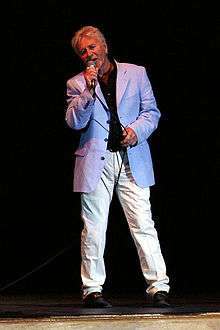
A number of artists have also been double one-hit wonders, having a hit both with a group and solo or as a member of two different groups.
- Dan Baird: "Keep Your Hands to Yourself" (No. 2, December 1986) with The Georgia Satellites and "I Love You Period" (No. 26, December 1992), solo
- Ron Dante: "Leader of the Laundromat" (No. 19, January 1965) with The Detergents and "Tracy" (No. 9, October 1969) with The Cuff Links; Dante was also lead singer of The Archies, a group that despite having numerous top-40 hits is still occasionally considered a one-hit wonder since only one Archies hit, "Sugar, Sugar" (No. 1, September 1969), survived in recurrent rotation.
- Everlast: "Jump Around" (No. 3, October 1992) with House of Pain and "What It's Like" (No. 13, May 1999), solo
- Janis Joplin: "Piece of My Heart" (No. 12, November 1968) with Big Brother & the Holding Company and "Me and Bobby McGee" (No. 1, March 1971), solo
- Jay Ferguson and Mark Andes, both members of Spirit with 1969's I Got a Line on You #25 and Jo Jo Gunne with 1972's Run Run Run #27
- Joey Levine: "Run Run Run" with The Third Rail and "Life Is a Rock (But the Radio Rolled Me)", solo, as "Reunion". Levine also sang lead on several hits from The Ohio Express and led the Kasenetz-Katz Singing Orchestral Circus, a supergroup of the bubblegum pop groups at the Kasenetz-Katz record label where Levine produced, on "Quick Joey Small".
- Kiki Dee: "I've Got the Music in Me" (No. 12, 1974) as frontwoman for the Kiki Dee Band and "Don't Go Breaking My Heart" (No. 1, 1976) as a duet partner with Elton John
- Limahl: "Too Shy" (No. 5, July 1983) with Kajagoogoo and "NeverEnding Story" (No. 17, May 1985), solo
- Benny Mardones: "Into The Night" (No. 12, 1980) and "Into the Night" (No. 20, 1989)
- Iain Matthews: "Woodstock" (No. 23, March 1971) with Matthews Southern Comfort and "Shake It" (No. 13, February 1979), solo, as "Ian Matthews"
- Ted Nugent: "Journey to the Center of the Mind" (No. 16, August 1968) with The Amboy Dukes[29] and "Cat Scratch Fever" (No. 30, October 1977)[23] These songs were not the end of his chart career, however, as he would score two additional chart hits with Damn Yankees ("High Enough", No. 3, 1991 and "Where You Goin' Now", No. 20, 1992).
- Sylvia Robinson: "Love Is Strange" (No. 11, March 1957) with Mickey & Sylvia and "Pillow Talk" (No. 3, June 1973), solo as "Sylvia"
- Paul Rodgers: "All Right Now" with Free (No. 4, 1970) and "Radioactive" with The Firm (No. 28, 1985). Rodgers also had several hits with Bad Company.
- Bruce Sudano: "Tighter, Tighter" (No. 7, 1970) with Alive N Kickin' and "Heaven Knows" with Brooklyn Dreams and Donna Summer. Although Brooklyn Dreams had several collaborations with Summer, who was Sudano's girlfriend at the time, "Heaven Knows" was the only one in which Brooklyn Dreams was credited as the artist.
- Jaron Lowenstein: "Crazy for This Girl" (No. 15, March 2001) with Evan & Jaron and "Pray for You" (No. 34, July 2010), solo as "Jaron and the Long Road to Love"
- Alex Band: "Wherever You Will Go" (No. 5, March 2002) with The Calling and "Why Don't You & I" (No. 8, October 2003), as a collaboration with Santana.
- Lauren Bennett: Featured on "Party Rock Anthem" (No. 1, 2011) along with LMFAO and GoonRock, and featured on "Wild Wild Love" (No. 30, 2014) as part of girl group G.R.L along with Pitbull.
J. D. Souther charted exactly once as part of at least three acts: "You're Only Lonely" as a solo artist (No. 7, November 1979), "Fallin' in Love" with Souther–Hillman–Furay Band (No. 27, 1974) and "Her Town Too" as a duet with James Taylor (No. 11, 1981).
Rupert Holmes, in addition to three top-40 hits under his own name, was also a member of three one-hit wonder studio groups: The Cuff Links, The Street People ("Jennifer Tomkins," No. 36 in March 1970) and The Buoys ("Timothy," No. 17, July 1971).
British singer Tony Burrows may be the most prolific "one-hit wonder" — he sang lead vocals on five singular hits for five groups in the United States:
- "United We Stand", The Brotherhood of Man, No. 13 (January 1970) (note that a different group also known as the Brotherhood of Man later charted with "Save Your Kisses for Me" in 1976, but that group had no personnel in common with the group led by Burrows)
- "Love Grows (Where My Rosemary Goes)", Edison Lighthouse, No. 5 (April 1970)
- "My Baby Loves Lovin'", White Plains, No. 13 (July 1970)
- "Gimme Dat Ding", The Pipkins, No. 9 (July 1970)
- "Beach Baby", The First Class, No. 4 (October 1974)
Solo career one-hit wonders
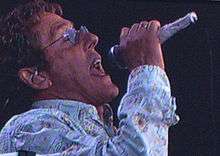
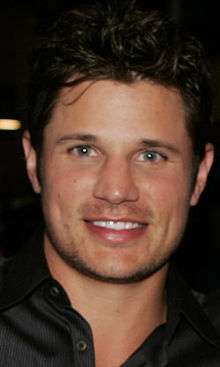
A number of members of successful bands became one-hit wonders when they went solo:
- Ashley Parker Angel of O-Town: "Let U Go" (No. 12, May 2006)[30]
- Roger Daltrey of The Who: "Without Your Love", from the film McVicar, in which he also starred (No. 20, November 1980)[31]
- El Debarge of Debarge: "Who's Johnny" (No. 3, July 1986)[32]
- Rick Derringer of The McCoys: "Rock and Roll, Hoochie Koo" (No. 23, January 1974)[9]
- Dennis DeYoung of Styx: "Desert Moon" (No. 10, November 1984)[33]
- Donald Fagen of Steely Dan: "I.G.Y. (What a Beautiful World)" (No. 26, October 1982)[34]
- Agnetha Fältskog of ABBA: "Can't Shake Loose" (No. 29, November 1983)[34]
- Ace Frehley of Kiss: "New York Groove" (No. 13, February 1979)[35]
- Susanna Hoffs of The Bangles: "My Side of the Bed" (No. 30, February 1991)[12]
- Terry Jacks of The Poppy Family: "Seasons in the Sun" (No. 1, March 1974)[36]
- Jordan Knight of New Kids on the Block: "Give It to You" (No. 10, May 1999)[37]
- Nick Lachey of 98 Degrees: "What's Left of Me" (No. 6, May 2006)[38])
- Anni-Frid Lyngstad of ABBA, as Frida: "I Know There's Something Going On" (No. 13, March 1983)[39]
- Joey McIntyre of New Kids on the Block: "Stay the Same" (No. 10, April 1999)[40]
- Michael Nesmith of The Monkees, with The First National Band: "Joanne" (No. 21, August 1970)[23]
- Ric Ocasek of The Cars: "Emotion in Motion" (No. 15, October 1986)[41]
- Benjamin Orr of The Cars: "Stay the Night" (No. 24, November 1986)[23]
- Claudette Ortiz of City High: "Two Wrongs" (No. 28, August 2002)[42]
- "Little Jimmy Osmond" of The Osmonds: "Long Haired Lover from Liverpool" (No. 38, June 1972)[23]
- John Phillips of The Mamas & the Papas: "Mississippi" (No. 32, May 1970)[43]
- John Sebastian of The Lovin' Spoonful: "Welcome Back" (No. 1, May 1976)[44]
- Tommy Shaw of Styx (and later of Damn Yankees): "Girls with Guns" (No. 33, September 1984)[25]
- Mike Shinoda of Linkin Park, as Fort Minor: "Where'd You Go" (No. 4, July 2006)
- David A. Stewart of Eurythmics: "Lily Was Here" (No. 11, July 1991)[45]
- Paul Stookey of Peter, Paul and Mary: "The Wedding Song (There Is Love)" (No. 24, July 1971)[46]
- Andy Taylor of Duran Duran: "Take It Easy" (No. 24, May 1986)[46]
- John Taylor of Duran Duran: "I Do What I Do (Theme for 9½ Weeks)" (No. 22, July 1986)
- Jane Wiedlin of The Go-Go's: "Rush Hour" (No. 9, July 1988)[47]
- Brian Wilson of The Beach Boys: "Caroline, No" (No. 32, March 1966)[48]
Re-recordings of songs by one-hit wonders
Some songs have been solitary hits for different acts, in some cases almost simultaneously on the charts, due to an artist or label trying to "cash in" on the popularity of a particular song.[49] In other cases, a song may be rerecorded as a cover much later, providing a second artist with the same solo hit.
- "Nuttin' for Christmas" — Ricky Zahnd and the Blue Jeaners (No. 21, December 1955); Barry Gordon (No. 6, December 1955); Joe Ward (No. 20, December 1955)
- "Moonglow and Theme from Picnic" — George Cates (No. 4, June 1956); Morris Stoloff (No. 2, June 1956)
- "Stranded in the Jungle" — The Jay Hawks (No. 18, July 1956); The Cadets (No. 15, August 1956)
- "Raunchy" — Bill Justis (No. 2, December 1957); Ernie Freeman (No. 4, December 1957)
- "Alley-Oop" — Dante and the Evergreens (No. 15, July 1960); Hollywood Argyles (No. 1, July 1960)
- "Cast Your Fate to the Wind" — Vince Guaraldi (No. 22, February 1963); Sounds Orchestral (No. 10, May 1965)
- "Stand by Me" — Spyder Turner (No. 12, February 1967); Mickey Gilley (No. 22, May 1980); the original artist, Ben E. King, hit the Top 10 with it twice—first in its original release in 1961, and then with a 1986 re-release.)
- "Na Na Hey Hey Kiss Him Goodbye" — Steam (No. 1, December 1969[50]); The Nylons (released as "Kiss Him Goodbye") (No. 12, June 1987[51])
- "One Tin Soldier" — The Original Caste (No. 34, 1970); Coven (No. 26, 1971)
- "I Can't Stand the Rain" — Ann Peebles (No. 38, 1973); Eruption (No. 18, 1978)
- "Funkytown" — Lipps, Inc. (No. 1, May 1980); Pseudo Echo (No. 6, June 1987)
See also
References
- Jancik, Wayne (1998). The Billboard Book of One-Hit Wonders. New York: Billboard Books. ISBN 0-8230-7622-9
- Whitburn, Joel (2000). The Billboard Book of Top 40 Hits. New York: Billboard Books. ISBN 0-8230-7690-3
Notes
- ↑ Jancik, p487
- ↑
- ↑ Jancik, p28
- ↑ Jancik, p498
- ↑ Jancik, p76
- ↑ Jancik, p363
- ↑ http://www.billboard.com/artist/282069/bill+cosby/chart
- ↑ Jancik, p426
- 1 2 Jancik, p500
- ↑ Jancik, p197
- ↑ Jancik, p177
- 1 2 Jancik, p502
- ↑ Jancik, p237
- ↑ Billboard Hot 100 - Artist Chart History - Paris Hilton
- ↑ Jancik, p443
- 1 2 Jancik, p503
- ↑ Jancik, p323
- ↑ Jancik, p27
- ↑ Jancik, p504
- ↑ Jancik, p85
- ↑ Jancik, p378
- ↑ Jancik, p411
- 1 2 3 4 5 Jancik, p505
- ↑ Jancik, p409
- 1 2 Jancik, p507
- ↑ Jancik, p367
- ↑ Jancik, p457
- ↑ Jancik, p288
- ↑ Jancik, p243
- ↑ "Ashley Parker Angel Album & Song Chart History", Billboard.com
- ↑ Jancik, p403
- ↑ http://www.billboard.com/artist/301529/el+debarge/chart
- ↑ Jancik, p429
- 1 2 Jancik, p501
- ↑ Jancik, p382
- ↑ Jancik, p332
- ↑ Whitburn, p357
- ↑ Billboard - Artist Chart History - Nick Lachey
- ↑ Jancik, p419
- ↑ Whitburn, p417
- ↑ Jancik, p445
- ↑ Billboard - Google Books. Retrieved 13 April 2013.
- ↑ Jancik, p32
- ↑ Jancik, p358
- ↑ Jancik, p486
- 1 2 Jancik, p508
- ↑ Jancik, p460
- ↑ Jancik, p509
- ↑ Jancik, p12
- ↑ Jancik, p268
- ↑ Jancik, p452
External links
- VH1's One-hit Wonder TV special
- Timmy Thomas-Why Can't We Live Together
- 411 Music Ten Deep 8.20.10: Top Ten One-Hit Wonder Songs
- "One-Hit Wonders," The Book