M
|


M (named em /ˈɛm/)[1] is the 13th letter of the modern English alphabet and the ISO basic Latin alphabet.
History
| Egyptian hieroglyph "n" | -Phoenician Mem |
Etruscan M | Greek Mu |
Roman M | ||
|---|---|---|---|---|---|---|
|
 |
 |
 |
 |

The letter M is derived from the Phoenician Mem, via the Greek Mu (Μ, μ). Semitic Mem is most likely derived from a "Proto-Sinaitic" (Bronze Age) adoption of the "water" ideogram in Egyptian writing. The Egyptian sign had the acrophonic value /n/, from the Egyptian word for "water", nt; the adoption as the Semitic letter for /m/ was presumably also on acrophonic grounds, from the Semitic word for "water", *mā(y)-.[2]
Use in writing systems
The letter ⟨m⟩ represents the bilabial nasal consonant sound [m] in the orthography of Latin as well as in that of many modern languages, and also in the International Phonetic Alphabet. In English, the Oxford English Dictionary (first edition) says that ⟨m⟩ is sometimes a vowel in words like spasm and in the suffix -ism. In modern terminology, this is described as a syllabic consonant (IPA [m̩]).
Other uses
The Roman numeral Ⅿ represents the number 1000, though it was not used in Roman times.[3]
Related characters
Descendants and related characters in the Latin alphabet
Ancestors and siblings in other alphabets
- 𐤌 : Semitic letter Mem, from which the following symbols originally derive
Ligatures and abbreviations
- ₥ : Mill (currency)
- ™ : Trademark symbol
- ℠ : Service mark symbol
Computing codes
| Character | M | m | ||
|---|---|---|---|---|
| Unicode name | LATIN CAPITAL LETTER M | LATIN SMALL LETTER M | ||
| Encodings | decimal | hex | decimal | hex |
| Unicode | 77 | U+004D | 109 | U+006D |
| UTF-8 | 77 | 4D | 109 | 6D |
| Numeric character reference | M | M | m | m |
| EBCDIC family | 212 | D4 | 148 | 94 |
| ASCII 1 | 77 | 4D | 109 | 6D |
- 1 Also for encodings based on ASCII, including the DOS, Windows, ISO-8859 and Macintosh families of encodings.
Other representations

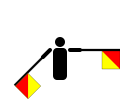

References
- ↑ "M" Oxford English Dictionary, 2nd edition (1989); Merriam-Webster's Third New International Dictionary of the English Language, Unabridged (1993); "em," op. cit.
- ↑ See F. Simons, "Proto-Sinaitic — Progenitor of the Alphabet" Rosetta 9 (2011): Figure Two: "Representative selection of proto-Sinaitic characters with comparison to Egyptian hieroglyphs", (p. 38) Figure Three: "Chart of all early proto-Canaanite letters with comparison to proto-Sinaitic signs" (p. 39), Figure Four: "Representative selection of later proto-Canaanite letters with comparison to early proto-Canaanite and proto-Sinaitic signs" (p. 40). See also: Goldwasser (2010), following Albright (1966), "Schematic Table of Proto-Sinaitic Characters" (fig. 1).
- ↑ Gordon, Arthur E. (1983). Illustrated Introduction to Latin Epigraphy. University of California Press. p. 45. ISBN 9780520038981. Retrieved 3 October 2015.

External links
 Media related to M at Wikimedia Commons
 The dictionary definition of M at Wiktionary
- The dictionary definition of m at Wiktionary