Majma-ul-Bahrain
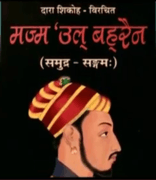
Majma-ul-Bahrain (Hindi: मज्म 'उल बह् रैन', Urdu: مجمع البحرین, "The Confluence of the Two Seas") is a book on comparative religion authored by Dara Shikoh.[1][2][3] It was devoted to a revelation of the mystical and pluralistic affinities between Sufic and Vedantic speculation.[4][5] The book was authored as a short treatise in Persian in 1654–55.[6][7] Its Hindi version is called Samudra Sangam Grantha.[8][9][10]
|

References
- ↑ "Prince of peace".
- ↑ "Emperor's old clothes".
- ↑ "Why We Should Oppose the Aurangzebing of Aurangzeb - The Wire". thewire.in. Retrieved 2016-11-19.
- ↑ "Lahore's iconic mosque stood witness to two historic moments where tolerance gave way to brutality".
- ↑ MAJMA' UL BAHARAIN or The Mingling Of Two Oceans, by Prince Muhammad Dara Shikoh, Edited in the Original Persian with English Translation, notes & variants by M.Mahfuz-ul-Haq, published by The Asiatic Society, Kolkata, Bibliotheca Indica Series no. 246, 1st. published 1929. See also this book review by Yoginder Sikand, indianmuslims.in.
- ↑ "A dangerous influence: Modi govt under RSS control".
- ↑ Sitaram Yechury. "Why repeat Vajpayee's slogans when you do not have his credibility?: Sitaram Yechury". scroll.in. Retrieved 2016-11-19.
- ↑ "The Tradition of Indo-Persian Literature".
- ↑ "मज्म 'उल बह् रैन' (समुद्र संगम:) -Majma Ul Bahrain". exoticindiaart.com. Retrieved 2016-11-19.
- ↑ "समुद्र संगम - भोला शंकर व्यास Samudra Sangam - Hindi book by - Bhola Shanker Vyas". pustak.org. Retrieved 2016-11-19.
This article is issued from Wikipedia - version of the 11/22/2016. The text is available under the Creative Commons Attribution/Share Alike but additional terms may apply for the media files.