Pre-Parsian style
The "Pre-Parsian style" (New Persian:شیوه معماری پیش از پارسی) is a sub-style of architecture (or "zeer-sabk") when categorizing the history of Persian/Iranian architectural development.
This style of architecture flourished in the Iranian Plateau until the eighth century B.C.E. during the era of the Median Empire. It is often classified as a subcategory of Parsian Architecture.[1]
The oldest remains of the architectural landmarks in this style are the Teppe Zagheh, near Qazvin. Other extant examples of this style are Chogha zanbil, Sialk, Shahr-i Sokhta, and Ecbatana.
Elamite and proto-Elamite buildings among others, are covered within this stylistic subcategory as well.
Gallery
-
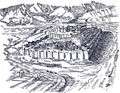
Sialk necropolis. 3000-4000 B.C.E.
-

Chogha Zanbil ziggurat. 1250 B.C.E.
References
- ↑ Sabk Shenasi Mi'mari Irani (Study of styles in Iranian architecture), M. Karim Pirnia. 2005. ISBN 964-96113-2-0 pp.40-51
See also
| Styles |
|  | ||||||||||
|---|---|---|---|---|---|---|---|---|---|---|---|---|
| Elements | ||||||||||||
| Traditional cities | ||||||||||||
| Theory and analysis | ||||||||||||
| Lists |
| |||||||||||
This article is issued from Wikipedia - version of the 6/2/2015. The text is available under the Creative Commons Attribution/Share Alike but additional terms may apply for the media files.