Pulu
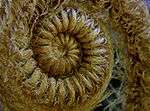
Pulu is a silky material obtained from the fibers of the hapuʻu pulu (Cibotium glaucum), a tree fern of Hawaii.[1] It is made of the brown hairs that cover the young fiddlehead as it uncoils.
Ancient Hawaiʻi
In ancient Hawaiʻi, pulu (which means "mulch" or "padding" in the Hawaiian language[1]) was used to embalm the dead. Women used pulu as an absorbent during their menstrual cycle. When their time came around, they were isolated to a house called the hale peʻa or menstrual house.[2] Men were strongly discouraged to set foot on the grounds of the hale peʻa, by strict social custom known as kapu. Hawaiians organized the hapuʻu fern into two genders; male and female. Males had the tough pulu, and females had the soft pulu. All soiled pulu was then buried around the hale peʻa.
19th-century industry
For a period in the 19th century, pulu was collected, dried, and exported to California commercially as pillow and mattress stuffing.[3] A stone structure in Hawai'i Volcanoes National Park known as the Old Pulu Factory was a site for drying and packing pulu. However, the discovery that pulu breaks down and crumbles into dust after only a few years led to the demise of the industry. Pulu was collected by cutting down the slow-growing ferns, an extremely unsustainable method. The industry shut down by the 1880s.[4]
References
- 1 2 Mary Kawena Pukui and Samuel Hoyt Elbert (2003). "lookup of pulu ". in Hawaiian Dictionary. Ulukau, the Hawaiian Electronic Library, University of Hawaii Press. Retrieved October 20, 2010.
- ↑ Mary Kawena Pukui and Samuel Hoyt Elbert (2003). "lookup of pe'a ". in Hawaiian Dictionary. Ulukau, the Hawaiian Electronic Library, University of Hawaii Press. Retrieved October 20, 2010.
- ↑ Louis Harmuth (1915), Dictionary of textiles, Fairchild publishing company, p. 128
- ↑ Douglass H. Hubbard (June 1952). Ferns of Hawaii National Park. Hawaii Nature Notes. V. Hawaii Natural History Association. p. 6.
Further reading
- Puakea Nogelmeier (1986). Pulu: historical aspects of a Hawaiian forest industry.
External links
- Nathan Yuen (May 31, 2010). "Napau Crater". HawaiianForest.Com. Retrieved October 20, 2010. (trail to old pulu factory described)