Richard Chisolm
| Richard Chisolm | |
|---|---|
 | |
| Residence | Baltimore, Maryland |
| Nationality | American |
| Alma mater | University of Maryland, Baltimore County |
| Occupation | Cinematographer and film-maker |
| Notable work | Don't Say Goodbye: America's Endangered Species |
| Website | http://www.richardchisolm.com/ |
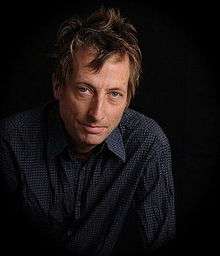
Richard Chisolm is an Emmy Award-winning cinematographer and film-maker based in Baltimore, Maryland.[1][2][3] Chisolm is most experienced in documentaries and actuality-style dramas.[4] He has done additional camera work for feature films, television series, commercials and corporate and educational videos.[4][5]
Early life and education
Chisolm graduated from the University of Maryland, Baltimore County in 1982.[1][6] In 2001, he was awarded "Distinguished Alumnus of the Year."[4]
Career
After graduating from college, Chisolm taught film classes at Johns Hopkins University until 1992.[4] Don't Say Goodbye: America's Endangered Species, a piece he worked on for the National Geographic Channel, received an Emmy Award in 1998.[1][7][8] The program followed two photographers who traveled the United States to take pictures of endangered animal and plant species.[1] That year, Chisolm worked as a camera operator for Homicide: Life on the Streets, a television series featured on NBC.[6] He served as director of photography for 24/7, a six-part documentary on Johns Hopkins Hospital produced by ABC, in 2000.[1][9] In 2002, Chisolm screened three short documentaries at the Maryland Documentary Symposium.[10] Chisolm shot and co-produced "The Building of a Sanctuary," a documentary about the architecture and setting of The Sheppard and Enoch Pratt Hospital, in 2003.[7]
Chisolm spoke about school lunch reform at a TEDx event in May 2010.[11] He directed and shot Cafeteria Man, a documentary on school food reform, in 2011.[12] The documentary was screened at over 20 international film festivals and aired on PBS.[13][14][15] He has shot documentaries for the American Red Cross in Zimbabwe and El Salvador, directed the camera for a PBS series on homeless children in Guatemala and shot eleven National Geographic documentaries.[8] Chisolm has received a Peabody Award, a Columbia duPont Journalism award, two Kodak Vision awards and three CINE Golden Eagles.[15]
Filmography
- The Passing (1985)
- Local Heroes, Global Change (1 episode) (1990)
- Memory & Imagination: New Pathways to the Library of Congress (1990)
- Childhood (1991)
- American Experience (1 episode) (1994)
- Innovation (1997)
- Volcano: Nature's Inferno (1997)
- Arguing the World (1998)
- America's Endangered Species: Don't Say Good-bye (1998)
- Frontline (2 episodes) (1997/1998)
- Anatomy of a Homicide: Life on the Street (1998)
- Avalanche: The White Death(1998)
- American Masters (1 episode) (1999)
- American Byzantine (2000)
- Hopkins 24/7 (2000)
- In Bad Taste (2000)
- The Shape of Life (1 episode) (2001)
- Nurses (1 episode) (2001)
- Treasure Seekers: Mysteries of the Nile (2001)
- Treasure Seekers: In the Shadow of Ancient Rome (2001)
- Plagues: The Ebola Riddle (2001)
- The Rise and Fall of Jim Crow (2002)
- The Question of God: Sigmund Freud & C.S. Lewis (2004)
- Hunter & Hunted (4 episodes) (2005)
- Nova (1 episode) (2005)
- All the Dirt on A Dirty Shame (2005)
- 50/50 (2006)
- National Geographic Explorer (2 episodes) (2006/2007)
- The Truth About Cancer (2008)
- Waiting for Hockney (2008)
- Hopkins (7 episodes) (2008)
- The Response (2008)
- Bach & Friends (2010)
- Cafeteria Man (2011)
- Risk Takers (1 episode) (2011)
- What Love Is: The Duke Pathfinders 50 (2012)
- JFK: A President Betrayed (2013)
- American Secrets (2014)
External links
References
- 1 2 3 4 5 Shapiro, Stephanie (January 18, 2000). "Getting The Picture". Retrieved December 14, 2014.
- ↑ "The Filmmakers". Retrieved December 14, 2014.
- ↑ "Director to screen, speak about rebel chef in 'Cafeteria Man'". February 21, 2013. Retrieved December 14, 2014.
- 1 2 3 4 "Richard Chisolm: Director of the film "Cafeteria Man"". University of Maryland, Baltimore County.
- ↑ "Rex Sikes' Movie Beat chats with cinematographer/filmmaker Richard Chisolm". Retrieved December 14, 2014.
- 1 2 Denise Elizabeth Lee. "Creating Visual Poetry and Compelling Stories". Retrieved December 14, 2014.
- 1 2 Lisa DeNike (May 28, 2003). "Healing power, by design".
- 1 2 Michael Fickes. "Director of Photography Richard Chisolm seeks out the highs and lows of real life".
- ↑ Zurawik, David (June 17, 2007). "Second act for 'Hopkins 24 / 7'". Retrieved December 14, 2014.
- ↑ Eric Allen Hatch (November 13, 2002). "Real Life on the Streets".
- ↑ "TEDx Talks on Food Cambridge: How Do You Eat?–Sunday, May 16th". May 4, 2010. Retrieved December 14, 2014.
- ↑ "100 Years of the Henry Phipps Psychiatric Clinic". Retrieved December 14, 2014.
- ↑ "Richard Chisolm". Retrieved December 14, 2014.
- ↑ "TEDxCambridge: How do you eat? May 16th". Retrieved December 14, 2014.
- 1 2 "Speakers: Richard Chisolm". Retrieved December 14, 2014.