Rubus parvifolius
| Rubus parvifolius | |
|---|---|
 | |
| Scientific classification | |
| Kingdom: | Plantae |
| (unranked): | Angiosperms |
| (unranked): | Eudicots |
| (unranked): | Rosids |
| Order: | Rosales |
| Family: | Rosaceae |
| Genus: | Rubus |
| Species: | R. parvifolius |
| Binomial name | |
| Rubus parvifolius L. 1753 not Moon 1824 nor Sm. 1815 nor Raf. 1833 nor Walter 1788 | |
| Synonyms[1] | |
| |
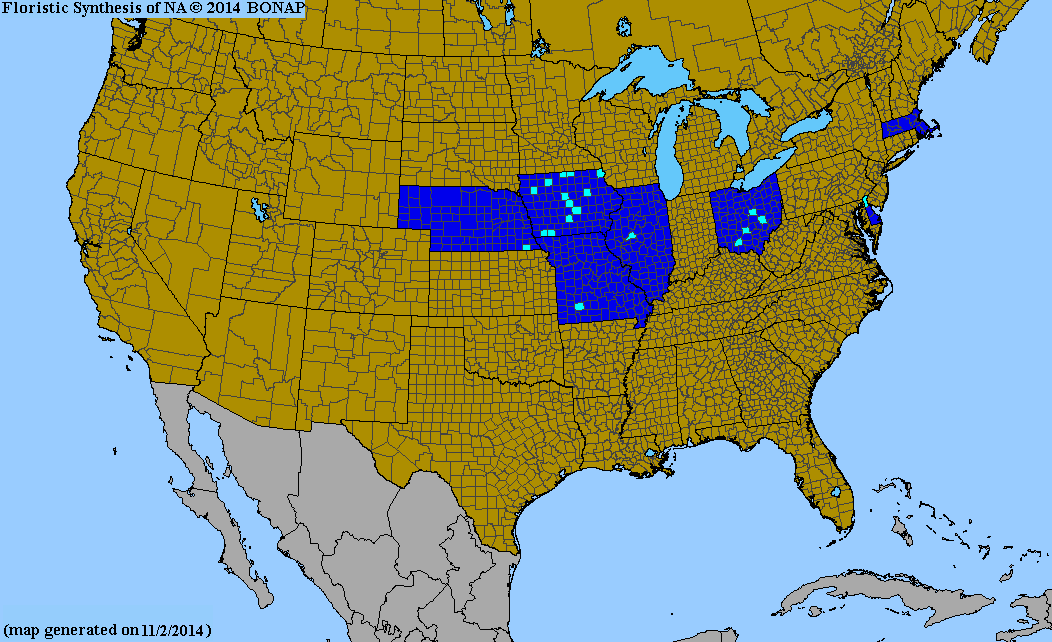
Rubus parvifolius, called Japanese bramble, or Australian raspberry in the United States[2] or native raspberry in Australia[3] is a species of plants in the rose family. It is a scrambling shrub native to eastern Asia (China, Japan, Korea, Vietnam) and Australia.[4][5][3] It has also become naturalized in a few scattered locations in the United States.[6]
Rubus parvifolius is a shrub up to 2 meters tall with arching branches armed with curved prickles. Young stems are finely pubescent, becoming hairless with age. The leaves are pinnate with 3 to 5 toothed leaflets. Flowers are numerous, in clumps at the end of stems, and have red or pink petals. The red fruit is 1 cm wide.[5][7]
Uses
The red fruit is pleasantly flavored and can be eaten raw or used in sauces and jams. The dried fruit are used in traditional Chinese medicine.[8] It has shown hepatoprotective and antioxidant activities in studies on mice.[9]
References
 |
Wikimedia Commons has media related to Rubus parvifolius. |
- ↑ "The Plant List: A Working List of All Plant Species". Retrieved 16 May 2015.
- ↑ Flora of North America, Rubus parvifolius Linnaeus, 1753. Japanese bramble, Australian raspberry or bramble
- 1 2 Atlas of Living Australia
- ↑ USDA GRIN Taxonomy, retrieved 16 May 2015
- 1 2 Flora of China, Rubus parvifolius Linnaeus, 1753. 茅莓 mao mei
- ↑ Biota of North America Program 2014 county distribution map
- ↑ PlantNET, Rubus parvifolius plant profile
- ↑ Cuizhi Gu; Chaoluan Li; Lingdi Lu; Shunyuan Jiang; Crinan Alexander; Bruce Bartholomew; Anthony R. Brach; David E. Boufford; Hiroshi Ikeda; Hideaki Ohba; Kenneth R. Robertson & Steven A. Spongberg (2003), "Rubus parvifolius", Flora of China online, 9, retrieved 16 May 2015
- ↑ Gao J, Sun CR, Yang JH, Shi JM, Du YG, Zhang YY, Li JH, Wan HT.,"Evaluation of the hepatoprotective and antioxidant activities of Rubus parvifolius L." J Zhejiang Univ Sci B. 2011 Feb;12(2):135-42