Segula (Kabbalah)
For the Israeli moshav, see Sgula.
A segula (Hebrew: סגולה, pl. סגולות, segulot, "remedy" or "protection"[1]) is protective or benevolent charm or ritual in Kabbalistic and Talmudic tradition.[2][3]
Etymology
The word segula appears in the Hebrew Bible in Exodus 19:5 and Deuteronomy 7:6, where God refers to the Jewish nation as His segula (treasure). The root of this word, segol, is the name of a Hebrew vowel-point represented by three dots. According to the Ohr Hachaim, a segula is "a charm that supersedes logic".[4]
List of segulot
Following is a list of popular segulot.
Fertility and childbirth
- Distributing chai rotel (about 54 liters[5]) of drink at the grave of Rabbi Shimon bar Yochai in Meron, Israel on Lag BaOmer is considered a propitious remedy for infertility, as well as for helping a person find his mate or recover from serious illness[6]
- Acting as kvatterin for a baby boy at his brit milah is a segula for childless couples to have children of their own[7]
- Eating an etrog or etrog jam facilitates an easy childbirth[8]
- Drinking from the waters of Ein Sataf in Israel prevents a breech birth[9]
- Wearing a ruby helps prevent miscarriage and eases birth. Ingesting ground up rubies enhances the chance of pregnancy.[10]
Protection from harm
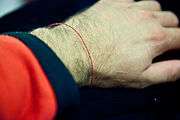
Wearing a red string
- Wearing a red string cut from a longer length that has been wound around Rachel's Tomb is an ancient tradition that protects the wearer from danger[11][12]
- Giving tzedaka (charity) money to a traveler to donate when he arrives at his destination helps protect the traveler from harm[13]
- Concentrating on the phrase Ein Od Milvado (Hebrew: אין עוד מלבדו, "There is none but Him [God]"[14]) shields a person from danger[15]
Other
- Praying at the grave of Rabbi Jonathan ben Uzziel in Amuka, Israel is considered propitious for finding one’s mate within the coming year[16]
- Praying at the Western Wall for 40 consecutive days is considered a segula for finding one’s mate[17][18]
- Holding the jewelry of a bride while she is escorted to her chuppah is a segula for finding one’s own mate[19]
- Placing a pigeon on a person’s navel is efficacious for curing jaundice[2][20]
- Giving tzedaka in the merit of Rabbi Meir Baal Hanes is a segula for finding a lost object[21]
- Buying a new knife for Rosh Hashanah is a propitious remedy for livelihood[22]
- One can hang a special note around the neck of a chicken and use it to identify a thief[23]
References
- ↑ Afilalo, Raphael (2006). Kabbalah Glossary: Clarification of terms and concepts of the Kabbalah. Kabbalah Editions. p. 251. ISBN 292324107X.
- 1 2 Rosner, Fred; Bleich, J. David; Brayer, Menachem M. (2000). Jewish Bioethics. KTAV Publishing House. p. 59. ISBN 0881256625.
- ↑ Finkelstein, Baruch; Finkelstein, Michal (2005). The Third Key: A Jewish couple's guide to fertility. Feldheim Publishers. p. 124. ISBN 1583303901.
- ↑ Chrysler, HaRav Eliezer. "Parshas Yisro: A Treasured Nation". shemayisrael.com. Retrieved 18 March 2012.
- ↑ Lebovits, Moishe Dovid. "Lag BaOmer" (PDF). Halachically Speaking. p. 6. Retrieved 27 April 2010.
- ↑ Lev, Barukh ben David (2003). There Is No Such Thing As Coincidence: And other stories of Divine Providence. 2. Feldheim Publishers. pp. 45–46. ISBN 1583306153.
- ↑ Finman, Rabbi Herschel (2012). "What is the Function of the Kvatter?". Chabad.org. Retrieved 17 March 2012.
- ↑ Weisberg, Chana (2004). Expecting Miracles: Finding meaning and spirituality in pregnancy through Judaism. Urim Publications. p. 134. ISBN 9657108519.
- ↑ Alpert, Yair (26 January 2010). "Rav Fischer's Segulah Miraculously Works By Not Working – Saves Life of Baby". matzav.com. Retrieved 17 March 2012.
- ↑ Rabbeinu Bachya ben Asher, commentary to Parshas Tetzaveh (Shmos 28:15) notes "...Reuven's stone was the ruby, a red stone, red like blood, and its Segulah is that any woman that carries [or wears] it will never miscarry a child. It is also said that it is beneficial for a woman who has a hard time giving birth [to have this stone].If this stone is ground up and added to food or drink [of a woman] it is extremely beneficial to help her become pregnant..."
- ↑ Tannenbaum, Rabbi Gershon (10 February 2012). "The Red Strings of Kever Rochel". The Jewish Press. Retrieved 17 March 2012.
- ↑ Rossoff, Dovid (October 1997). "Tomb of Rachel". The Jewish Magazine. Retrieved 17 March 2012.
- ↑ Epstein, Donneal (2000). Halachos for the Traveler. Feldheim Publishers. p. 4. ISBN 1583304398.
- ↑ "Devarim 4:35". Retrieved 25 April 2013.
- ↑ Goldberger, Rabbi Moshe. "Learn the Secret: Discovering Hashem's constant presence in our lives". Targum Press. Retrieved 18 March 2012.
- ↑ "The Mystical Power of Amuka". Hamodia. 18 June 2009. Retrieved 18 March 2012.
- ↑ Kiel, Dvora (2007). When the Time is Right: Manifestations of Divine Providence in everyday life. Feldheim Publishers. p. 486. ISBN 9657371295.
- ↑ "Origin of the 40 Days". westernwallprayers.org. 2012. Retrieved 18 March 2012.
- ↑ "It's a Segulah". Jewish Treats. 25 February 2009. Retrieved 17 March 2012.
- ↑ Rosner et al. (2000), pp. 59–62.
- ↑ Lev (2003), p. 81.
- ↑ Danzinger, Rabbi Eliezer (2012). "Purchasing a New Knife for Rosh Hashanah". Chabad.org. Retrieved 17 March 2012.
- ↑ "Old Jewish Book Outlines how to Turn Copper into Gold". Retrieved 2015-09-27.
External links
This article is issued from Wikipedia - version of the 11/10/2016. The text is available under the Creative Commons Attribution/Share Alike but additional terms may apply for the media files.