Yayway Cemetery
 | |
| Details | |
|---|---|
| Location | North Okkalapa Township, Yangon |
| Country | Myanmar |
| Coordinates | 16°55′56″N 96°09′57″E / 16.93233°N 96.16585°ECoordinates: 16°55′56″N 96°09′57″E / 16.93233°N 96.16585°E |
| Type | Public |
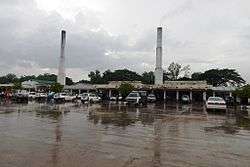
Yayway Cemetery (Burmese: ရေဝေးသုသာန်, also spelt Yeway Cemetery) is a cemetery located in North Okkalapa Township, Yangon, Myanmar.[1] The cemetery is the final resting place of many prominent Burmese. The cemetery is maintained by the Yangon City Development Committee's environmental maintenance department.[2] Yayway Cemetery also consists of various ethnic and religious cemeteries, including those of the Burmese Indians, Sino-Burmese (Cantonese, Hokkien, and Yunnanese), Karen, Japanese, Bahais, Hindus, Christians, Muslims, Parsis, and Jews.[2]
History
In the mid-1990s, the State Law and Order Restoration Council, the ruling junta, forcibly closed down and relocated historic cemeteries lying near the city center of Yangon.[3] One of the biggest was Kyandaw Cemetery (in Kamayut Township), which was relocated to suburbs in 1996 to 1997, and redeveloped as the Yangon Drugs Elimination Museum.[3] Descendants of the interred were given one month's notice to move the remains for reburial.[4] Similarly, that year, the Nine Mile Cemetery (ကိုးမိုင်သင်္ချိုင်း), an ethnic Chinese cemetery was demolished and remains were relocated to Yayway Cemetery.[5] The interred remains from these cemetery relocation projects were reburied at Yayway Cemetery, located on the outskirts of the city.[6]
Today, Yayway Cemetery is the busiest in the Yangon area, handling the highest volume of cremations (70 to 100 per day).[7]
Notable burials
- Sai Htee Saing
- Nay Win Maung[8]
- Min Theinkha[9]
- Nat Nwe[10]
- Ni Ko Ye[1]
- Khun Sa[11]
- Paragu[12]
- Ohn Myint[13]
- U Lwin[14]
- Mahn Thet San[15]
- Chit Maung[16]
- Ma Ma Lay[16]
- Win Tin
References
- 1 2 Nyein Ei Ei Htwe (2 November 2009). "Writer Ni Ko Ye dies of heart attack". Myanmar Times. Retrieved 8 April 2012.
- 1 2 "ရန်ကုန်မြို့တော်ကြီးကို သာယာလှပအောင် ကြိုးစား ဆောင်ရွက်နေသော ရန်ကုန်မြို့တော်ဝန်နှင့် တွေ့ဆုံခြင်း". Newsweek (in Burmese). 23 July 2013. Retrieved 19 July 2015.
- 1 2 Seekins, Donald M. (Summer 2005). "The State and the City: 1988 and the Transformation of Rangoon". Pacific Affairs. University of British Columbia. 78 (2): 267. doi:10.5509/2005782257. JSTOR 40023916.
- ↑ "RIP: Rest In Pieces". The Irrawaddy. January 1997. Retrieved 14 April 2012.
- ↑ "Displacement of Population in Rangoon Division" (PDF). Displacement and causes of displacement in Rangoon Division: 7. 3 January 2007.
- ↑ "Forced Relocation and Internally Displaced Persons" (PDF). Human Rights Yearbook 1996: Burma. National Coalition Government of Union of Burma: 202,. July 1997.
- ↑ Min Thet; Phanida (4 February 2010). "Cremation fees to be hiked sevenfold". Mizzima. Retrieved 14 April 2012.
- ↑ Aung, Peter (1 January 2012). "Nay Win Maung dies of heart attack". Democratic Voice of Burma. Retrieved 25 February 2012.
- ↑ Khine Thazin Aung (11 August 2008). "Astrologer's funeral draws thousands of mourners". Myanmar Times. Retrieved 8 April 2012.
- ↑ Sanda Lwin (16 May 2011). "Founder of 'Nwe Ni' magazine passes away, aged 78". Myanmar Times. Retrieved 8 April 2012.
- ↑ Khun Sa (1933-2007). Find A Grave Memorial.
- ↑ "Prominent Burmese writer Paragu has died at age 91. Funeral services were held at the Yayway Cemetery in Rangoon on Monday.". Mizzima. 12 April 2011. Retrieved 8 April 2012.
- ↑ Myint Maung (20 September 2010). "Spectrum of colleagues pay last respects to Ohn Myint". Mizzima. Retrieved 8 April 2012.
- ↑ Ko Wild (7 December 2011). "U Lwin, former NLD secretary, dies of natural causes". Mizzima. Retrieved 8 April 2012.
- ↑ "Dr. Marn Thet San, patron of Mon culture, passes away at 79". Independent Mon News Agency. 16 October 2008. Retrieved 8 April 2012.
- 1 2 Ma Ma Lay (2008). A Man Like Him. SEAP Publications. pp. 186–187. ISBN 9780877277774.