ARM Cortex-A15
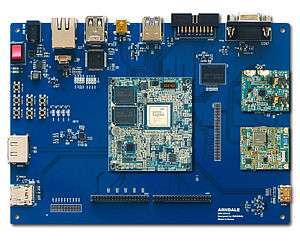 | |
| Produced | In production late 2011,[1] to market late 2012[2] |
|---|---|
| Designed by | ARM Holdings |
| Max. CPU clock rate | 1.0 GHz to 2.5 GHz |
| Min. feature size | 32 nm/28 nm initially[3] to 22 nm roadmap[3] |
| Microarchitecture | ARMv7-A |
| Cores | 1–4 per cluster, 1–2 clusters per physical chip[4] |
| L1 cache | 64 KB (32 KB I-cache, 32 KB D-cache) per core |
| L2 cache | Up to 4 MB[5] per cluster |
| L3 cache | none |
The ARM Cortex-A15 MPCore is a 32-bit processor core licensed by ARM Holdings implementing the ARMv7-A architecture. It is a multicore processor with out-of-order superscalar pipeline running at up to 2.5 GHz.[6]
Overview
ARM has claimed that the Cortex-A15 core is 40 percent more powerful than the Cortex-A9 core with the same number of cores at the same speed.[7] The first A15 designs came out in the autumn of 2011, but products based on the chip did not reach the market until 2012.[1]
Key features of the Cortex-A15 core are:
- 40-bit Large Physical Address Extensions (LPAE) addressing up to 1 TB of RAM.[8][9] As per the x86 Physical Address Extension, virtual address space remains 32 bit.[10]
- 15 stage integer/17–25 stage floating point pipeline, with out-of-order speculative issue 3-way superscalar execution pipeline[11]
- 4 cores per cluster, up to 2 clusters per chip with CoreLink 400 (CCI-400, an AMBA-4 coherent interconnect) and 4 clusters per chip with CCN-504.[12] ARM provides specifications but the licensees individually design ARM chips, and AMBA-4 scales beyond 2 clusters. The theoretical limit is 16 clusters; 4 bits are used to code the CLUSTERID number in the CP15 register (bits 8 to 11).[13]
- DSP and NEON SIMD extensions onboard (per core)
- VFPv4 Floating Point Unit onboard (per core)
- Hardware virtualization support
- Thumb-2 instruction set encoding to reduce the size of programs with little impact on performance
- TrustZone security extensions
- Jazelle RCT for JIT compilation
- Program Trace Macrocell and CoreSight Design Kit for unobtrusive tracing of instruction execution
- 32 KB data + 32 KB instruction L1 cache per core
- Integrated low-latency level-2 cache controller, up to 4 MB per cluster
Chips
First implementation came from Samsung in 2012 with the Exynos 5 Dual, which shipped in October 2012 with the Samsung Chromebook Series 3 (ARM version), followed in November by the Google Nexus 10.
Press announcements of current implementations:
- Broadcom SoC[14]
- HiSilicon K3V3[15]
- Nvidia Tegra 4 (Wayne)[16] and Tegra K1.
- Samsung Exynos 5 Dual, Quad and Octa[17]
- ST-Ericsson Nova A9600 (cancelled) (dual-core @ 2.5 GHz over 20k DMIPS)[18][19]
- Texas Instruments OMAP 5 SoCs[20] and Sitara AM57x family[21]
Other licensees, such as LG,[22][23] are expected to produce an A15 based design at some point.
Systems on a chip
| Model Number | Semiconductor technology | CPU | GPU | Memory interface | Wireless radio technologies | Availability | Utilizing devices |
|---|---|---|---|---|---|---|---|
| HiSilicon K3V3 | 28 nm HPL | big.LITTLE architecture using 1.8 GHz dual-core ARM Cortex-A15 + dual-core ARM Cortex-A7 |
Mali-T628 | H2 2014 | |||
| Nvidia Tegra 4 T40 | 28 nm HPL | 1.9 GHz quad-core ARM Cortex-A15[24] + 1 low power core | Nvidia GeForce @ 72 core, 672 MHz, 96.8 GFLOPS = 48 PS + 24 VU × 0.672 × 2 (96.8 GFLOPS)[25](support DirectX 11+, OpenGL 4.X, and PhysX) | 32-bit dual-channel DDR3L or LPDDR3 up to 933 MHz (1866 MT/s data rate)[24] | Category 3 (100 Mbit/s) LTE | Q2 2013 | Nvidia Shield Tegra Note 7 |
| Nvidia Tegra 4 AP40 | 28 nm HPL | 1.2-1.8 GHz quad-core + low power core | Nvidia GPU 60 [24] cores (support DirectX 11+, OpenGL 4.X, and PhysX) | 32-bit dual-channel 800 MHz LPDDR3 | Category 3 (100 Mbit/s) LTE | Q3 2013 | |
| Nvidia Tegra K1 | 28 nm HPm | 2.3 GHz quad-core + battery saver core | Kepler SMX (192 CUDA cores, 8 TMUs, 4 ROPs) | 32-bit dual-channel DDR3L, LPDDR3 or LPDDR2 | Q2 2014 | Jetson TK1 development board,[26] Lenovo ThinkVision 28, Xiaomi MiPad, Shield Tablet | |
| Texas Instruments OMAP5430 | 28 nm | 1.7 GHz dual-core | PowerVR SGX544MP2 @ 532 MHz + dedicated 2D graphics accelerator | 32-bit dual-channel 532 MHz LPDDR2 | Q2 2013 | phyCore-OMAP5430[27] | |
| Texas Instruments OMAP5432 | 28 nm | 1.5 GHz dual-core | PowerVR SGX544MP2 @ 532 MHz + dedicated 2D graphics accelerator | 32-bit dual-channel 532 MHz DDR3 | Q2 2013 | DragonBox Pyra, SVTronics EVM,[28] Compulab SBC-T54[29] | |
| Texas Instruments AM57x | 28 nm | 1.5 GHz single or dual-core | PowerVR SGX544MP2 @ 532 MHz + dedicated 2D graphics accelerator | 32-bit dual-channel 532 MHz DDR3 | Q4 2015 | BeagleBoard x15, Elesar Titanium[30] | |
| Texas Instruments 66AK2x | 28 nm | 1.5 GHz single, dual, and quad core devices | 1-8 C66x DSP cores, radio acceleration, and many other application specific accelerators | Q4 2015 | |||
| Exynos 5 Dual[31] (previously Exynos 5250)[32] |
32 nm HKMG | 1.7 GHz dual-core ARM Cortex-A15 | ARM Mali-T604[33] (quad-core) @ 533 MHz; 68.224 GFLOPS | 32-bit dual-channel 800 MHz LPDDR3/DDR3 (12.8 GB/sec) or 533 MHz LPDDR2 (8.5 GB/sec) | Q3 2012[32] | Samsung Chromebook XE303C12,[34] Google Nexus 10, Arndale Board,[35] Huins ACHRO 5250 Exynos,[36] Freelander PD800 HD,[37] Voyo A15, HP Chromebook 11, Samsung Homesync | |
| Exynos 5 Octa[38][39][40] (internally Exynos 5410) |
28 nm HKMG | 1.6 GHz[41] quad-core ARM Cortex-A15 and 1.2 GHz quad-core ARM Cortex-A7 (ARM big.LITTLE)[42] | IT PowerVR SGX544MP3 (tri-core) @ 480 MHz 49 GFLOPS (532 MHz in some full-screen apps)[43] | 32-bit dual-channel 800 MHz LPDDR3 (12.8 GB/sec) | Q2 2013 | Samsung Galaxy S4 I9500,[44][45] Hardkernel ODROID-XU,[46] Meizu MX3, ZTE Grand S II TD[47] ODROID-XU | |
| Exynos 5 Octa[48] (internally Exynos 5420) |
28 nm HKMG | 1.8-1.9 GHz quad-core ARM Cortex-A15 and 1.3 GHz quad-core ARM Cortex-A7 (ARM big.LITTLE with GTS) | ARM Mali-T628 MP6 @ 533 MHz; 109 GFLOPS | 32-bit dual-channel 933 MHz LPDDR3e (14.9 GB/sec) | Q3 2013 | Samsung Chromebook 2 11.6",[49] Samsung Galaxy Note 3,[50] Samsung Galaxy Note 10.1 (2014 Edition), Samsung Galaxy Note Pro 12.2, Samsung Galaxy Tab Pro (12.2 & 10.1), Arndale Octa Board, Galaxy S5 SM-G900H [51] | |
| Exynos 5 Octa[52] (internally Exynos 5422) |
28 nm HKMG | 2.1 GHz quad-core ARM Cortex-A15 and 1.5 GHz quad-core ARM Cortex-A7 (ARM big.LITTLE with GTS) | ARM Mali-T628 MP6 @ 695 MHz (142 Gflops) | 32-bit dual-channel 933 MHz LPDDR3/DDR3 (14.9 GB/sec) | Q2 2014 | Galaxy S5 SM-G900, Hardkernel ODROID-XU3 & ODROID-XU4 [53] | |
| Exynos 5 Octa[54] (internally Exynos 5800) |
28 nm HKMG | 2.1 GHz quad-core ARM Cortex-A15 and 1.3 GHz quad-core ARM Cortex-A7 (ARM big.LITTLE with GTS) | ARM Mali-T628 MP6 @ 695 MHz (142 Gflops) | 32-bit dual-channel 933 MHz LPDDR3/DDR3 (14.9 GB/sec) | Q2 2014 | Samsung Chromebook 2 13,3"[55] | |
| Exynos 5 Hexa[56] (internally Exynos 5260) |
28 nm HKMG | 1.7 GHz dual-core ARM Cortex-A15 and 1.3 GHz quad-core ARM Cortex-A7 (ARM big.LITTLE with GTS) | ARM Mali-T624 | 32-bit dual-channel 800 MHz LPDDR3 (12.8 GB/sec) | Q2 2014 | Galaxy Note 3 Neo (announced January 31, 2014), Samsung Galaxy K zoom[57] | |
| Allwinner A80 Octa[58] | 28 nm HPm | Quad-core ARM Cortex-A15 and Quad-core ARM Cortex-A7 (ARM big.LITTLE with GTS) | PowerVR G6230 (Rogue) | 32-bit dual-channel DDR3/DDR3L/LPDDR3 or LPDDR2[59] | |||
See also
- ARM architecture
- List of ARM cores
- List of applications of ARM cores
- Comparison of ARMv8-A cores
- JTAG
References
- 1 2 TI Reveals OMAP 5: The First ARM Cortex A15 SoC
- ↑ ARM Expects First Cortex-A15 Devices in Late 2012
- 1 2 ARM Unveils Cortex-A15 MPCore Processor to Dramatically Accelerate Capabilities of Mobile, Consumer and Infrastructure Applications — in the Supporting Technology section
- ↑ CoreLink Network Interconnect for AMBA AXI
- ↑ Cortex-A15 Processor — Product description
- ↑ ARM Cortex-A15 - ARM Processor
- ↑ Exclusive : ARM Cortex-A15 "40 Per Cent" Faster Than Cortex-A9
- ↑ ARM7 40-bit, virtualization
- ↑ ARM e-mail to LINUX: Add support for the Large Physical Address Extensions
- ↑ "Calxeda plots server dominance with ARM SoCs."
- ↑ Exploring the Design of the Cortex-A15 Processor Travis Lanier
- ↑ "ARM A15 web page, Specification tab"
- ↑ "Cortex-A15 MPCore Technical Reference Manual"
- ↑ Broadcom announces plans for ARM's Cortex-A15 SoC | thinq
- ↑ Huawei Announces HiSilicon K3V3 Chipset For Smartphones on Tom's Hardware
- ↑ NVIDIA Announces "Project Denver" to Build Custom CPU Cores Based on ARM Architecture, Targeting Personal Computers to Supercomputers - NVIDIA Newsroom
- ↑ Samsung Announces Industry First ARM Cortex-A15 Processor Samples for Tablet Computers
- ↑ Changing the game: ST-Ericsson Unveils NovaThor™ Family of Smartphone Platforms Combining its Most Advanced Application Processors with the Latest Generation of Modems
- ↑ Desire Athow (14 March 2011). "Exclusive : ARM Cortex-A15 "40 Per Cent" Faster Than Cortex-A9". Retrieved 2011-01-22.
- ↑ OMAP Applications Processors - OMAP 5 Platform
- ↑ TI disrupts the embedded market with the most powerful SoCs featuring real-time processing and multimedia
- ↑ LG Electronics Licenses ARM Processor Technology to Drive - ARM
- ↑ Why LG Getting ARM Cortex A15 License Is A Big Deal | ITProPortal.com
- 1 2 3 http://www.nvidia.com/object/tegra-4-processor.html
- ↑ http://www.359gsm.com/forum/viewtopic.php?f=127&t=13134&p=26833#p26833
- ↑ "Jetson TK1 development board".
- ↑ "The phyCORE-OMAP5430 System on Module". Retrieved 8 February 2016.
- ↑ "OMAP5432 EVM". Retrieved 8 February 2016.
- ↑ "TI OMAP5 System-on-Module (SoM)". Retrieved 8 February 2016.
- ↑ "Titanium motherboard + Linux operating system". Retrieved 8 February 2016.
- ↑ "Samsung Exynos 5 Dual". Products. Samsung Electronics Co.Ltd. Retrieved 7 October 2013.
- 1 2 "Samsung Announces Industry First ARM Cortex-A15 Processor Samples for Tablet Computers". News. Samsung Electronics Co.Ltd. 30 November 2011. Retrieved 7 October 2013.
- ↑ "Samsung Exynos 5 Dual (Exynos 5250) RISC Microprocessor User's Manual Revision 1.0" (PDF). Samsung Electronics Co. Ltd. October 2012. Retrieved 7 October 2013.
- ↑ "Samsung Chromebook". Google. Retrieved 7 October 2013.
- ↑ "ArndaleBoard.org". www.arndaleboard.org. Retrieved 7 October 2013.
- ↑ "휴인스". Huins.com. Retrieved 2013-07-10.
- ↑ "Freelander PD800 HD Dual Core Exynos 5250 Android 4.2 Tablet PC 9.7" Retina Capacitive Touch Screen 2048*1536 2GB/16GB BT White". GeekBuying.com. Retrieved 10 July 2013.
- ↑ "Samsung Highlights Innovations in Mobile Experiences Driven by Components, in CES Keynote". CES News. SAMSUNG. 9 January 2013. Retrieved 7 October 2013.
- ↑ "2013 International CES Keynote". Events. SAMSUNG. 9 January 2013. Retrieved 7 October 2013.
- ↑ Nguyen, Hubert (17 January 2013). "Samsung Exynos 5 Octa Specs & Details". Uberzigmo. Blogzilla LL:. Retrieved 7 October 2013.
- ↑ "New Samsung Exynos 5 Octa". Products. Samsung Electronics Co.Ltd. Retrieved 7 October 2013.
- ↑ "Big.LITTLE Processing with ARM Cortex-A15 & Cortex-A7" (PDF). Arm.com. Archived from the original (PDF) on 17 April 2012. Retrieved 7 October 2013.
- ↑ "Update on GPU Optimizations in Galaxy S 4". AnandTech. Retrieved 7 October 2013.
- ↑ "Samsung Galaxy S4 32 GB". CaCell. Retrieved 7 October 2013.
- ↑ "Your country will get Exynos or Snapdragon variant of the Galaxy S 4, we have the answer!". SamMobile.com. 20 March 2013. Retrieved 17 October 2013.
- ↑ "Products: Exynos5 Octa". Odroid Platform Developer. Hardkernel Co., Ltd. Retrieved 7 October 2013.
- ↑ "ZTE Grand S II TD". DeviceSpecifications. Retrieved 10 January 2014.
- ↑ "New Samsung Exynos 5 Octa". Products. Samsung Electronics Co.Ltd. Retrieved 7 October 2013.
- ↑ "Samsung Chromebook 2 11.6".
- ↑ "Samsung Galaxy Note 3 specs and features now official". Androidauthority.com. 4 September 2013. Retrieved 7 October 2013.
- ↑ https://www.samsungindiaestore.com/products/mobiles/Galaxy_S5_SM-G900HZWA
- ↑ "Samsung Unveils New Products from its System LSI Business at Mobile World Congress". Samsung Tomorrow. Retrieved 26 February 2013.
- ↑ "Products: Exynos5 Octa". Odroid Platform Developer. Hardkernel Co., Ltd. Retrieved 24 December 2014.
- ↑ "Samsung Exynos". Samsung Tomorrow. Retrieved 28 April 2014.
- ↑ "Samsung Chromebook 2 13.3".
- ↑ "Samsung Unveils New Products from its System LSI Business at Mobile World Congress". 26 February 2014. Retrieved 2 May 2014.
- ↑ "Samsung Galaxy K zoom". DeviceSpecifications. Retrieved 29 April 2014.
- ↑ "Allwinner UltraOcta A80 processor packs a PowerVR Series6 GPU with 64 cores". Imagination. March 2014.
- ↑ "A80". Allwinner. May 2014.