Baudh State
| Baudh State ବୌଦ୍ଧ | |||||
| Princely State of British India | |||||
| |||||
|
Flag | |||||
 | |||||
| History | |||||
| • | Established | 1874 | |||
| • | Accession to the Union of India | 1948 | |||
| Area | |||||
| • | 1921 | 3,274 km2 (1,264 sq mi) | |||
| Population | |||||
| • | 1921 | 130,103 | |||
| Density | 39.7 /km2 (102.9 /sq mi) | ||||
| Baudh Princely State | |||||
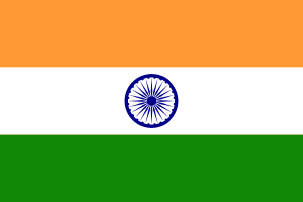
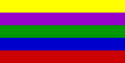
Baudh State, also known as Boudh State, was one of the princely states of India during the period of the British Raj. It was recognized as a state in 1874[1] and had its capital in Boudh town. Its last ruler signed the accession to the Indian Union on 1 January 1948.
History
Baudh was one among the 26 Feudatory States of Orissa. According to legend the state originated in a preexisting state that had been founded centuries before by a Brahmin who adopted as successor a nephew of the Raja of Keonjhar, belonging to the Bhanj Rajput Dynasty who ruled Mayurbhanj State.[2]
The formerly princely state's territory is now within Boudh District.
Rulers of Athmallik
The Rajas of the princely state were:
- 1874-1879 Pitamber Deo
- 1879-1913 Jogendra Deo
- 1913-1947 Narayan Prasad Deo
See also
References
- ↑ Princely States of India A-J
- ↑ Malleson, G. B. An historical sketch of the native states of India, London 1875, Reprint Delhi 1984
Coordinates: 20°50′N 84°19′E / 20.84°N 84.32°E
This article is issued from Wikipedia - version of the 6/28/2016. The text is available under the Creative Commons Attribution/Share Alike but additional terms may apply for the media files.