Panasonic Lumix DMC-GX7
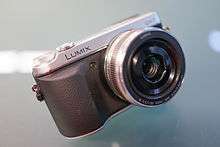 | |
| Overview | |
|---|---|
| Type | Micro Four Thirds system |
| Lens | |
| Lens | Micro Four Thirds system mount |
| Sensor/Medium | |
| Sensor | 4/3 type MOS ('Live MOS sensor') |
| Image sensor size | 17.3 x 13.0 mm (in 4:3 aspect ratio) |
| Maximum resolution | 4592 x 3448 (16.0 megapixels) |
| Storage | SD /SDHC / SDXC |
| Focusing | |
| Focus modes |
AF Single, AF Flexible, AF Continuous, Manual focus, Face Detection, AF Tracking, 23 Area Focusing / 1 Area Focusing, Pinpoint, AF detection range: EV -4 – 18 (ISO 100), Quick AF, Continuous AF, AF+MF, Eye Sensor AF, Touch AF/AE, Touch Pad AF, Touch Shutter, MF Assist, One Shot AF |
| Exposure/Metering | |
| Exposure modes |
Aperture priority, Shutter, Program AE, Manual, iAuto, SCN, Movie, Custom (3) |
| Metering modes | Multiple, Center-Weighted, Spot |
| Flash | |
| Flash | Built-in flash + hot shoe for external |
| Shutter | |
| Shutter | Mechanical shutter / Electronic shutter |
| Shutter speed range | 60–1/8000 sec |
| Continuous shooting | 9 RAW images, |
| Viewfinder | |
| Viewfinder | built-in 2.7MP, tilting LCV Live View Finder, with eye sensor |
| Image Processing | |
| Custom WB | Auto, Daylight, Cloudy, Shade, Incandescent, Flash, White Set 1/2, Color temperature setting |
| General | |
| Video/movie recording | AVCHD / MP4, NTSC / PAL, 1080p (25, 30, 60 fps), 720p (24, 50, 60 fps), 480p (25, 30 fps) |
| Rear LCD monitor | tilting 3 inch (3:2 aspect ratio), 1,040,000 dots |
| Battery | 1025 mAh 7.2v Lithium-Ion rechargeable battery |
| Dimensions | 123 mm × 71 mm × 54 mm (4.83 × 2.78 × 2.15 inches) |
| Weight | Approx. 402 g (14.2 oz) (camera body with battery and SD card) |
The Panasonic Lumix DMC-GX7 announced in August 2013, is a Micro Four Thirds compact mirrorless interchangeable lens camera. It was Panasonic's first Micro Four Thirds camera with a built-in in-body stabilization system (IBIS) and has a built-in EVF (add-on EVFs are no-longer supported).[1] Panasonic uses 2-axis in-body stabilization allowing the use of shutter speeds 1 to 2 stops slower than without stabilization,[2] compared to the 4 to 5 stops of improvement offered by Olympus' 5-axis stabilization.[3]
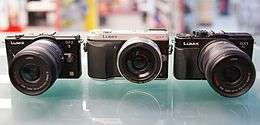
Features include:
- Magnesium alloy body
- New 16 MP Live MOS, Four Thirds sensor (25% better Signal to Noise performance, 10% better sensitivity, 10% better saturation level [4])
- Venus Engine
- ISO 200 - 25,600 (ISO 125 in extended mode, max. 3,200 in movie mode)
- Maximum shutter speed 1/8000 sec.
- AF detective range: -4 EV to 18 EV [5]
- Micro Four Thirds mount
- Full HD video capture, including 1920 x 1080/60p (AVCHD or MP4 formats)
- Full-time AF and tracking AF also available in cinema-like 24p video with a bit rate of maximum 24 Mbit/s
- Built-in live view finder (electronic view finder, EVF), 90-degree tilt-able, 2.764M pixel resolution with 100% Adobe RGB color reproduction
- Built-in 3", 1040K pixel tilting (45 deg. up, 80 deg. down), touch-screen LCD screen
- Built-in flash (and hot-shoe)
- Sensor-shift, in-body image stabilization (2-axis)
- 5fps using single AF with mechanical shutter / 60fps with electronic shutter up to 12 frames
- Focus Peaking
- 22 creative effects, HDR
- Panoramic mode, with filters
- Silent Mode, electronic shutter mode
- Near Field Communication (NFC)
- Wi-Fi connectivity
- Black / Silver versions
- Introduction price: $999 in the US (body only)
Successor
The Panasonic GX8, which succeeds the Panasonic GX7 camera, has a 20MO sensor, an ISO range of 100-25600 and 49 AF points. The Panasonic GX8 can record 4K videos and 4K time-lapse movies. Specification Comparison
References
- ↑ "Panasonic Lumix GX7 review". Retrieved January 9, 2014.
- ↑ "Review Panasonic GX7 (m43)". Retrieved June 1, 2015.
- ↑ "Olympus OMD EM5 Mark II review". Retrieved June 1, 2015.
- ↑ Imaging Source: Panasonic Lumix DMC-GX7 Review "Panasonic Lumix DMC-GX7 Review"
- ↑ Lumix GX7 Review Part 2 – Sensor, Shutter and In Body Stabilization "Lumix GX7 Review Part 2 – Sensor, Shutter and In Body Stabilization"
External links
- Official Website
- Official Specifications
- Review, ePhotozine.com
- Hands-on review, DPReview
- Hands-on review, Imaging Source
- Hands-on review, Pocket Lint
- Hands-on review, Trusted Reviews
- First Look video preview at What Digital Camera Channel (YouTube)
| Preceded by Panasonic Lumix DMC-GX1 |
Panasonic Micro Four Thirds System cameras August 2013–August 2015 |
Succeeded by Panasonic Lumix DMC-GX8 |
| Micro Four Thirds cameras timeline | |||||||||||||||||||||||||||||||||||||||||||||||||||||||||||||||||||||||||||||||||||||||||||||||||||||||||||||||||||||||||||||||||||||||||||||||||||||||||||||||||||||||||||||||||||||||||||||||||||||||||||||||||||||||||||||||||||||||||||||||||||||||||||||||||||||||||||||||||||||||||||||||||||||||||||||||||||||||||||||||||||||||||||||||||||||||||||||||||||||||||||||||||||||||||||||||||||||||||||||||||||||||||||||||||||||||||||||||||||||||||||||||||||||||||||||||||||||||||||||||||||||||||||||||||||||||||||||||||||||||||||||||||||||||||||||||||||||||||||||||||||||||||||||||||||||||||||||||||||||||||||||||||||||||||||||||||||||||||||||||||||||||||||||||||||||||||||||||||||||||||||||||||||||||||||||||||||||||||||||||||||||||||||||||||||||||||||||||||||||||||||||||||||||||||||||||||||||||||||||||||||||||||||||||||||||||||||||||||||||||||||||||||||||||||||||||||||||||||||||||||||||||||||||||||||||||||||||||||||||||||||||||||||||||||||||||||||||||||||||||||||||||||||||||||||||||||||||||||||||||
|---|---|---|---|---|---|---|---|---|---|---|---|---|---|---|---|---|---|---|---|---|---|---|---|---|---|---|---|---|---|---|---|---|---|---|---|---|---|---|---|---|---|---|---|---|---|---|---|---|---|---|---|---|---|---|---|---|---|---|---|---|---|---|---|---|---|---|---|---|---|---|---|---|---|---|---|---|---|---|---|---|---|---|---|---|---|---|---|---|---|---|---|---|---|---|---|---|---|---|---|---|---|---|---|---|---|---|---|---|---|---|---|---|---|---|---|---|---|---|---|---|---|---|---|---|---|---|---|---|---|---|---|---|---|---|---|---|---|---|---|---|---|---|---|---|---|---|---|---|---|---|---|---|---|---|---|---|---|---|---|---|---|---|---|---|---|---|---|---|---|---|---|---|---|---|---|---|---|---|---|---|---|---|---|---|---|---|---|---|---|---|---|---|---|---|---|---|---|---|---|---|---|---|---|---|---|---|---|---|---|---|---|---|---|---|---|---|---|---|---|---|---|---|---|---|---|---|---|---|---|---|---|---|---|---|---|---|---|---|---|---|---|---|---|---|---|---|---|---|---|---|---|---|---|---|---|---|---|---|---|---|---|---|---|---|---|---|---|---|---|---|---|---|---|---|---|---|---|---|---|---|---|---|---|---|---|---|---|---|---|---|---|---|---|---|---|---|---|---|---|---|---|---|---|---|---|---|---|---|---|---|---|---|---|---|---|---|---|---|---|---|---|---|---|---|---|---|---|---|---|---|---|---|---|---|---|---|---|---|---|---|---|---|---|---|---|---|---|---|---|---|---|---|---|---|---|---|---|---|---|---|---|---|---|---|---|---|---|---|---|---|---|---|---|---|---|---|---|---|---|---|---|---|---|---|---|---|---|---|---|---|---|---|---|---|---|---|---|---|---|---|---|---|---|---|---|---|---|---|---|---|---|---|---|---|---|---|---|---|---|---|---|---|---|---|---|---|---|---|---|---|---|---|---|---|---|---|---|---|---|---|---|---|---|---|---|---|---|---|---|---|---|---|---|---|---|---|---|---|---|---|---|---|---|---|---|---|---|---|---|---|---|---|---|---|---|---|---|---|---|---|---|---|---|---|---|---|---|---|---|---|---|---|---|---|---|---|---|---|---|---|---|---|---|---|---|---|---|---|---|---|---|---|---|---|---|---|---|---|---|---|---|---|---|---|---|---|---|---|---|---|---|---|---|---|---|---|---|---|---|---|---|---|---|---|---|---|---|---|---|---|---|---|---|---|---|---|---|---|---|---|---|---|---|---|---|---|---|---|---|---|---|---|---|---|---|---|---|---|---|---|---|---|---|---|---|---|---|---|---|---|---|---|---|---|---|---|---|---|---|---|---|---|---|---|---|---|---|---|---|---|---|---|---|---|---|---|---|---|---|---|---|---|---|---|---|---|---|---|---|---|---|---|---|---|---|---|---|---|---|---|---|---|---|---|---|---|---|---|---|---|---|---|---|---|---|---|---|---|---|---|---|---|---|---|---|---|---|---|---|---|---|---|---|---|---|---|---|---|---|---|---|---|---|---|---|---|---|---|---|---|---|---|---|---|---|---|---|---|---|---|---|---|---|---|---|---|---|---|---|---|---|---|---|---|---|---|---|---|---|---|---|---|---|---|---|---|---|---|---|---|---|---|---|---|---|---|---|---|---|---|---|---|---|---|---|---|---|---|---|---|---|---|---|---|---|---|---|---|---|---|---|---|---|---|---|---|---|---|---|---|---|---|---|---|---|---|---|---|---|---|---|---|---|---|---|---|---|---|---|---|---|---|---|---|---|---|---|---|---|---|---|---|---|---|---|---|---|---|---|---|---|---|---|---|---|---|---|---|---|---|---|---|---|---|---|---|---|---|---|---|---|---|---|---|---|---|---|---|---|---|---|---|---|---|---|---|---|---|---|---|---|---|---|---|---|---|---|---|---|---|---|---|---|---|---|---|---|---|---|---|---|---|---|---|---|---|---|---|---|---|---|---|---|---|---|---|---|---|---|---|---|---|---|---|---|---|---|---|---|---|---|---|---|---|---|---|---|---|---|---|---|---|---|---|---|---|---|---|---|---|---|---|---|---|---|---|---|---|---|---|---|---|---|---|---|---|---|---|---|---|---|---|---|---|---|---|---|---|---|---|---|---|---|---|---|---|---|---|---|---|---|---|---|---|---|---|---|---|---|---|---|---|---|---|---|---|---|---|---|---|---|---|---|---|---|---|---|---|---|---|---|---|---|---|---|---|---|---|---|
| |||||||||||||||||||||||||||||||||||||||||||||||||||||||||||||||||||||||||||||||||||||||||||||||||||||||||||||||||||||||||||||||||||||||||||||||||||||||||||||||||||||||||||||||||||||||||||||||||||||||||||||||||||||||||||||||||||||||||||||||||||||||||||||||||||||||||||||||||||||||||||||||||||||||||||||||||||||||||||||||||||||||||||||||||||||||||||||||||||||||||||||||||||||||||||||||||||||||||||||||||||||||||||||||||||||||||||||||||||||||||||||||||||||||||||||||||||||||||||||||||||||||||||||||||||||||||||||||||||||||||||||||||||||||||||||||||||||||||||||||||||||||||||||||||||||||||||||||||||||||||||||||||||||||||||||||||||||||||||||||||||||||||||||||||||||||||||||||||||||||||||||||||||||||||||||||||||||||||||||||||||||||||||||||||||||||||||||||||||||||||||||||||||||||||||||||||||||||||||||||||||||||||||||||||||||||||||||||||||||||||||||||||||||||||||||||||||||||||||||||||||||||||||||||||||||||||||||||||||||||||||||||||||||||||||||||||||||||||||||||||||||||||||||||||||||||||||||||||||||||